Most homeowners save $27,000 to $110,000 over 25 years by going solar, but the upfront price tag stops many from taking action. Here’s what solar actually costs in 2025 and why it might be more affordable than you think.
The Solar Sticker Shock (And Why It’s Misleading)
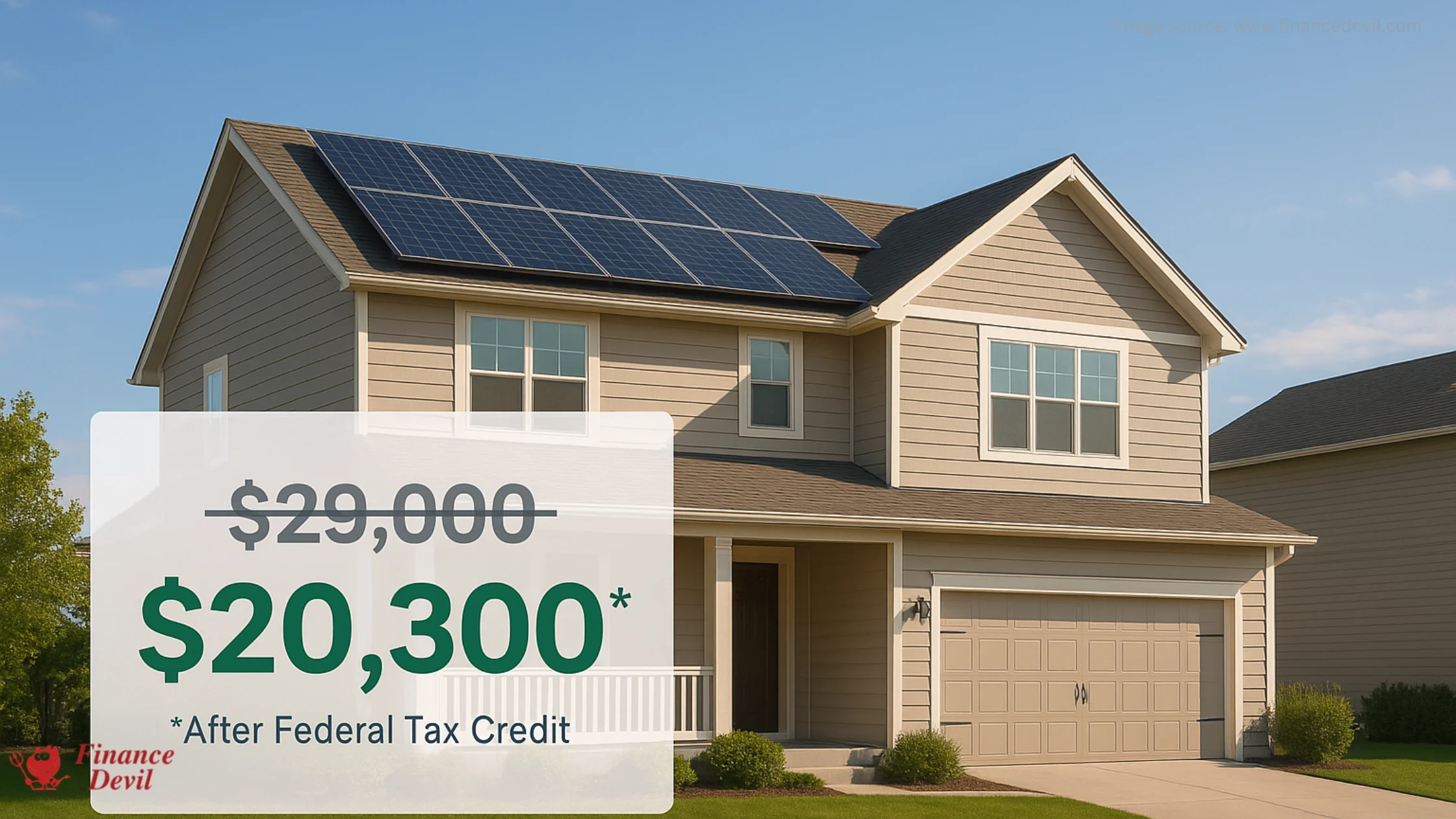
The average home solar system costs around $29,000 before incentives. That sounds expensive, until you factor in the 30% federal tax credit that drops your cost to roughly $20,000. Add state rebates and local incentives, and many homeowners pay even less while locking in decades of electricity savings.
What You’re Actually Paying For
Solar panels themselves only make up about 12% of your total cost. Here’s where your money really goes:
Equipment (46% of total cost):
- Solar panels: $3,700
- Inverter: $3,000
- Mounting hardware: $1,000
- Wiring and electrical: $2,600
Installation & Business Costs (46%):
- Labor: $2,000
- Sales, marketing, overhead: $11,600
Permits & Fees (8%): Around $2,400
The good news? System prices vary by location and system size, so comparing multiple quotes can save you thousands.
Your Real Cost Depends on These 4 Factors
1. System Size A typical home needs 12 kW to cover electricity needs. Larger systems cost more upfront but deliver bigger long-term savings. Smaller homes with efficient appliances can get away with 6-8 kW systems and lower costs.
2. Your Location Arizona homeowners pay around $2.07 per watt, among the lowest in the country. Wyoming residents pay $3.54 per watt. Labor costs, sunlight hours, and local competition all affect your final price.
3. Roof Complexity A simple, south-facing roof with full sun? Installation is straightforward. Multiple roof planes, shade, or older electrical panels? Expect to pay $2,000-$4,000 more for upgrades and additional equipment.
4. Battery Storage Adding a battery costs $10,000-$16,000 but provides backup power during outages and maximizes your energy independence. Many states offer separate battery incentives that reduce this cost.
When Solar Pays for Itself
The average payback period is 6-10 years. In sunny states with high electricity rates (looking at you, California and Massachusetts), homeowners break even faster, sometimes in under 5 years. After that, your electricity is essentially free for the remaining 15-20+ years of your system’s life.
Example: A $29,000 system costs $20,000 after the federal tax credit. If you save $200/month on electricity, you’ll break even in about 8 years and save over $40,000 by year 25.
READ ALSO: How Much You Can Save with Solar in 2025: State-by-State Breakdown
Smart Ways to Save on Solar
- Compare 3-5 quotes: Competition drives prices down by 25% or more
- Finance strategically: Zero-down solar loans let you start saving immediately, though you’ll pay interest
- Time it right: Install before incentives phase out, the 30% federal credit drops after 2032
- Size it right: Don’t overbuy, but don’t shortchange yourself either. A system that covers 100% of your usage delivers maximum ROI
Hidden Costs? Not Really.
Solar panels need virtually zero maintenance over their 25-30 year lifespan. Strong warranties cover equipment and labor. Your biggest “hidden” cost might be tree trimming ($300-$1,500) or replacing an aging roof before installation, which you’d need to do eventually anyway.
Is Solar Worth It for Your Home?
Solar makes the most financial sense if you:
- Have a moderate to high electric bill ($100+/month)
- Own your home and plan to stay 5+ years
- Live in an area with decent sunlight
- Qualify for federal, state, or local incentives
Even if you’re not sure, getting a free quote costs nothing and shows you exactly what you’d save. Most homeowners are surprised by how affordable solar has become, and how quickly it pays for itself.
Ready to See Your Solar Savings? Get 3 free, no-obligation quotes from vetted solar installers in your area. Compare prices, equipment options, and savings estimates in minutes, no sales calls until you’re ready.
Affiliate Disclosure: We may earn a commission when you request quotes through our partners, at no cost to you. This helps us provide free resources to homeowners exploring solar.
FAQ
How much will solar panels save me per year?
Most homeowners save $1,000-$3,000 annually on electricity, depending on system size and local rates. Your actual savings depend on your current bill and how much sunlight your roof gets.
Can I install solar with no money down?
Yes. Solar loans and leases require $0 down. With loans, you own the system and claim incentives. With leases, you pay a fixed monthly rate, often lower than your current electric bill.
What happens if I sell my house?
Homes with solar sell faster and for 4-6% more on average. If you own your system, the value transfers to the buyer. Leased systems can be transferred or paid off before sale.
Will solar work if my roof is shaded?
Partial shade doesn’t disqualify you. Microinverters and optimizers help panels work independently, maximizing production even with some shade. A site assessment will tell you if solar makes sense for your roof.