
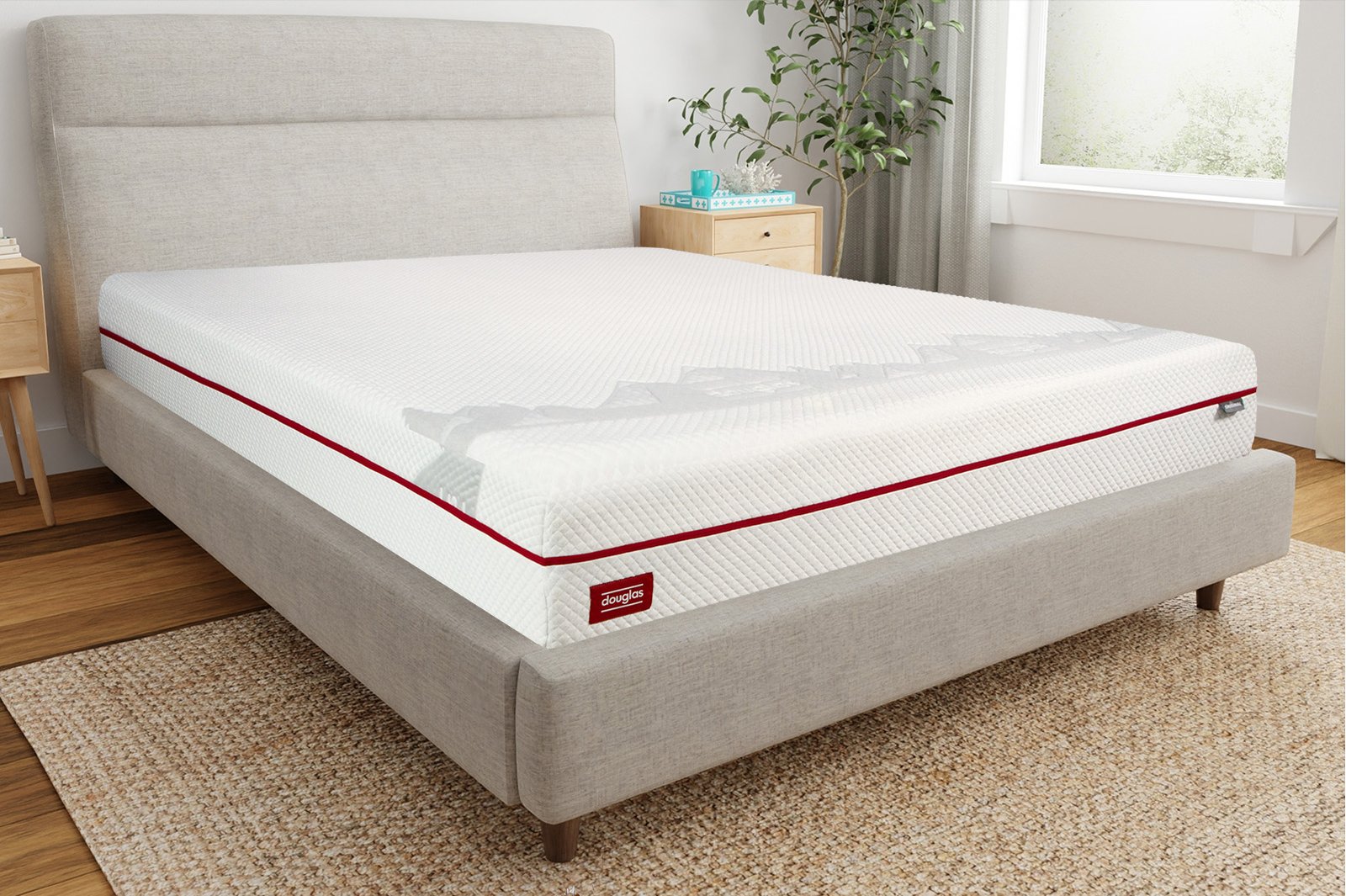
Finding the right bed frame when you’re a heavier sleeper isn’t just about aesthetics — it’s about safety, durability, and getting the quality sleep your body deserves. A flimsy frame that creaks, sags, or collapses isn’t just an inconvenience; it’s a genuine health and safety hazard. This comprehensive guide covers everything you need to know about choosing the best bed frames for heavy people, including weight capacity, materials, construction, and our top picks across every budget and sleep style.
Why Standard Bed Frames Often Fail Heavy Sleepers
Most bed frames sold in furniture stores and online are engineered for the “average” sleeper — typically someone weighing between 130 and 180 pounds. The problem is that a significant portion of the adult population falls outside this range. According to CDC data, the average American adult weighs considerably more than the design assumptions built into most mid-range bed frames.
When a bed frame isn’t built for your body weight, you’ll start noticing problems quickly. The center support legs begin to bow. The slats flex and eventually crack. The metal joints creak loudly every time you move. Worst of all, the frame can fail — a serious safety concern, particularly for people who struggle with mobility.
Standard frames typically carry weight ratings of 250 to 500 pounds for the entire sleep system (frame + mattress + sleeper). For a single person weighing 300 pounds, a 500-pound-rated frame leaves almost no margin once the mattress is factored in. For couples where both partners are heavier, the math gets even more precarious.
The good news is that heavy-duty bed frames are available at all price points and are built to handle heavier loads without sacrificing comfort or design.
What to Look for in a Bed Frame for Heavy People
Before diving into specific product recommendations, it’s important to understand what separates a genuinely heavy-duty bed frame from one that merely claims to be. Here are the key factors to evaluate:
Weight Capacity
This is the most obvious starting point. Look for frames with a stated weight capacity of at least 600 pounds for single sleepers and 1,000 pounds or more for couples. Keep in mind that the stated weight capacity should account for the total load — that means you, your partner (if applicable), and your mattress. A queen-size innerspring mattress alone can weigh between 80 and 130 pounds, and a dense memory foam mattress can weigh even more.
Be skeptical of vague claims. A reputable manufacturer will state the weight capacity clearly and specifically, not just use marketing language like “extra sturdy” or “reinforced construction.” Look for brands that do third-party weight testing and publish their results.
Frame Material
The material of the bed frame has an enormous impact on its strength, durability, and longevity. Here’s how the most common materials stack up for heavy sleepers:
Steel is the gold standard for heavy-duty frames. Heavy-gauge steel, typically 14-gauge or lower (lower gauge numbers indicate thicker steel), provides exceptional load-bearing strength. Look for welded steel joints rather than bolted connections where possible, as welds distribute stress more evenly and are less likely to loosen over time.
Solid wood is another excellent option, particularly hardwoods like oak, maple, and ash. Solid wood frames can handle significant weight loads and have the added advantage of not producing metal creaking sounds. Avoid frames made from engineered wood products like MDF or particleboard — these materials compress and crumble under sustained heavy loads.
Platform frames made from a combination of steel frames with wooden slat systems can work well, but the slats themselves must be scrutinized. More on that below.
Center Support and Leg Configuration
This is one of the most overlooked factors in bed frame selection. A frame can have thick, sturdy side rails and still fail catastrophically if it lacks adequate center support. For queen- and king-size frames, you should have at least one center support beam running lengthwise, with legs that reach the floor. The best heavy-duty frames have a center support rail plus additional cross-support beams, creating a grid or ladder-like support structure.
The center support legs themselves matter too. Fixed legs, welded or firmly attached to the support rail, are more reliable than adjustable screw-in legs, which can gradually unscrew under dynamic loads (e.g., movement during sleep).
For heavier sleepers, look for frames with five or more support legs. High-end heavy-duty options can have seven, nine, or even more legs for maximum floor contact and weight distribution.
Slat System (for Platform and Box-Spring-Optional Frames)
If you’re choosing a platform frame, the slat system is critical. Weak slats are one of the most common points of failure for heavier sleepers. The key variables are slat thickness, slat width, slat spacing, and whether the slats are connected.
For heavy sleepers, slats should be at least ¾ inch thick and 2.5 to 3 inches wide. Spacing between slats should be no more than 2.75 inches for innerspring mattresses and no more than 3 inches for foam mattresses. Some heavy-duty platform frames use steel slats, or a combination of steel and wooden slats, for maximum support.
Connected slat systems (in which a fabric or webbing strip links the slats together) are generally better than loose individual slats because they distribute weight more evenly and are less likely to shift or fall.
Joint and Connection Quality
Even a frame made from great materials will fail if the joints are poorly engineered. Avoid frames in which the primary structural connections rely solely on Allen bolts through thin metal brackets. The best heavy-duty frames use thick bracket hardware, multiple bolts per connection, or welded joints.
When assembling a new frame, be sure to tighten every connection fully and check them periodically. Under heavy, dynamic loads, bolted connections can work loose over time.
Low Profile vs. High Profile
For people with mobility challenges — whether due to weight, age, or injury — frame height matters enormously. Getting in and out of a very low or very high bed can be painful or even dangerous. Most heavy-duty frames are available in standard height (around 14 inches of clearance beneath the frame) or low-profile options. Choose based on your mattress thickness and your personal comfort when sitting on the edge of the bed. A good rule of thumb is that when you sit on the edge of the made bed, your feet should rest flat on the floor with your knees at roughly a 90-degree angle.
The Best Bed Frames for Heavy People: Our Top Picks
1. Zinus SmartBase Deluxe — Best Budget Option
Weight Capacity: 750 lbs Best For: Single heavy sleepers on a budget Sizes Available: Twin through California King
The Zinus SmartBase Deluxe punches well above its weight class, given its affordable price. The heavy-gauge steel construction provides a 750-pound weight capacity that’s well above average for frames in this price range. The frame features multiple center support legs, a tool-free assembly design, and 13.5 inches of under-bed storage clearance.
The frame is designed to work without a box spring, supporting your mattress directly on its steel slat system. The slats are steel, not wood, which is a significant structural advantage for heavier sleepers. The main drawback is the lack of a headboard bracket, so if you want a headboard, you’ll need to purchase one separately or choose a different frame.
For single sleepers weighing up to about 550 pounds (including mattress weight), this is one of the best-value options on the market.
Pros: Excellent price-to-strength ratio, tool-free assembly, steel slats, good under-bed storage clearance. Cons: No headboard attachment, basic aesthetics, some reports of slight squeaking after extended use
2. Titan Bed Frame by Brooklyn Bedding — Best Overall
Weight Capacity: 4,000 lbs (combined). Best For: Couples, plus-size sleepers, and anyone wanting maximum peace of mind. Sizes Available: Twin through Split King
If you’re serious about finding a bed frame that will genuinely never fail under your weight, the Titan Bed Frame from Brooklyn Bedding is in a class by itself. This frame was engineered specifically for heavier sleepers, and its 4,000-pound combined weight capacity (which accounts for the mattress, sleepers, and dynamic movement loads) is extraordinary.
The frame is constructed from heavy-gauge, cold-rolled steel with a powder-coated finish for corrosion resistance. The support structure features a comprehensive grid system with multiple center support beams and nine floor-contact legs for a queen-size bed. The slat system uses thick steel slats spaced closely together, providing exceptional mattress support and preventing any sag.
Assembly requires some effort — this is a substantial frame — but all hardware is included, and the instructions are clear. The frame features universal headboard and footboard brackets compatible with most standard headboard hardware.
The price point is significantly higher than budget options, but for heavy couples or anyone who has had the anxiety-inducing experience of a frame failure, the peace of mind is absolutely worth it.
Pros: Extraordinary weight capacity, exceptional build quality, universal headboard brackets, steel slats, and comprehensive center support. Cons: Higher price, heavier than average frames, assembly takes 30–45 minutes
3. Classic Brands Hercules Platform Frame — Best Mid-Range
Weight Capacity: 1,000 lbs. Best For: Couples or single heavy sleepers wanting a balance of price and performance. Sizes Available: Twin through California King
The Classic Brands Hercules earns its name with a no-nonsense heavy-duty construction that outperforms many frames costing twice as much. The 1,000-pound weight capacity makes it suitable for most couples without worry. The frame uses 2-inch-wide steel slats, supported by a robust center-beam system with multiple floor legs.
What sets the Hercules apart from other frames in this price range is the quality of its lateral support bracing. The side rails are braced against lateral flex. Hence, the frame maintains its structural integrity even under asymmetric loading (such as one heavier person sleeping primarily on one side of a shared bed). This kind of engineering detail is often absent in cheaper options.
The frame sits at a standard height that works well with most mattresses and features headboard brackets. The assembly is straightforward, though you’ll want a second person to help manage the larger pieces.
Pros: Solid 1,000-pound capacity, good lateral bracing, headboard brackets, straightforward assembly. Cons: Limited color/finish options, no storage drawers, somewhat utilitarian appearance
4. Saatva Adjustable Base — Best for Adjustable Sleeping
Weight Capacity: 850 lbs per side (1,700 lbs total for split king). Best For: Heavy sleepers who want adjustable positioning. Sizes Available: Twin XL through Split King
Adjustable bed bases are often overlooked in discussions of heavy-duty frames, but Saatva’s offering is purpose-built to handle serious weight. The motorized system uses a steel-frame chassis with a rated capacity of 850 pounds per base — meaning a split-king configuration can support 1,700 pounds total.
The motor and mechanism are the potential weak points in any adjustable base, and Saatva has addressed this with a higher-torque motor system and reinforced pivot joints. The zero-gravity and anti-snore presets work smoothly even under full load.
The base also includes an under-bed light system, massage functionality (on higher-tier models), and USB charging ports. At this price point, you’re getting both the structural integrity of a heavy-duty frame and the lifestyle benefits of an adjustable base.
Note that adjustable bases require a compatible mattress — hybrid or memory foam mattresses work well, but traditional innerspring mattresses are not compatible.
Pros: High per-side weight capacity, smooth motor performance, premium features, good warranty. Cons: Significant price investment, requires a compatible mattress, complex assembly best handled professionally
5. MALOUF Structures Heavy-Duty Steel Frame — Best for Couples
Weight Capacity: 1,800 lbs. Best For: Couples where both partners are heavier. Sizes Available: Full through California King
The MALOUF Structures frame is one of the highest-rated options specifically marketed toward couples who are both on the heavier side. Its 1,800-pound total weight capacity is well above the industry norm for mid-range frames. The construction uses 11-gauge steel (very thick for a bed frame) with welded connections at all major stress points — a significant durability advantage over bolt-only assemblies.
The frame features a 7-leg support system for queen sizes (and up to 9 legs for king), with center support legs made from solid steel tubing rather than folded sheet metal. The slat system provides excellent mattress support, and the frame is compatible with both platform-style and box-spring setups.
From an aesthetic standpoint, the MALOUF has a more refined appearance than purely utilitarian options, with cleaner lines and a better finish. It’s a frame you’d be comfortable showing off in a well-decorated bedroom.
Pros: Excellent weight capacity, welded construction, versatile setup options, and better aesthetics. Cons: Pricier than comparable options, limited headboard style compatibility, and tools required for assembly
6. Bear Bed Frame — Best for Athletic Heavy Sleepers
Weight Capacity: 1,000 lbs. Best For: Heavy sleepers who are also athletic or physically active. Sizes Available: Twin through California King
Bear’s bed frames are engineered in partnership with their performance mattress line, with an emphasis on dynamic load management — the kind of stress that comes from physically active people who move significantly during sleep. The frame’s 1,000-pound capacity is solid, and the connection hardware is notably heavy-duty.
What makes the Bear frame interesting for athletic, heavy sleepers is its vibration-dampening design, which reduces motion transfer and helps the frame maintain structural integrity under higher-than-average movement. The frame also has a slightly lower height profile than most heavy-duty options, which can be beneficial for people who do floor-based exercises and need to get up and down from bed more frequently.
Pros: Strong dynamic load management, lower-profile option available, vibration damping, compatible with most mattresses. Cons: 1,000-pound capacity is good but not exceptional, somewhat limited retailer availability
Bed Frame Styles and Which Works Best for Heavy Sleepers
Beyond specific product recommendations, it’s worth understanding how different bed frame styles perform for heavier sleepers:
Platform Frames are generally the best choice for heavy people. They provide a continuous support surface (or densely spaced slats) that distributes weight evenly. They eliminate the need for a box spring, which removes one potential point of failure. The key, as discussed, is ensuring the slats are thick and closely spaced. Platform frames also typically sit lower to the ground, which means the frame’s height from the floor to the mattress surface is shorter, making them safer in the unlikely event of a structural issue.
Metal Slatted Frames are a category unto themselves, distinct from the platform frames above. These are the minimalist “legs and rails” style frames you see in many bedrooms. They can work for heavy sleepers when made from thick-gauge steel with extensive center support, but the quality range is enormous. The cheapest versions of these frames are genuinely dangerous for heavy sleepers; the best versions (like the Zinus SmartBase) are excellent.
Wooden Platform Frames with solid hardwood construction can be outstanding for heavy sleepers, offering great weight capacity and the added benefit of a naturally quiet sleep surface (no metal creaking). The challenge is finding solid hardwood options — most “wood” bed frames sold at mainstream price points use veneered MDF or particleboard, which is completely inadequate for heavy sleepers.
Storage Bed Frames (those with built-in drawers) require extra scrutiny for heavy sleepers. The drawer mechanism inherently adds complexity and potential weak points. Look for storage frames specifically rated for high weight capacities. The floor-contact legs may also be positioned differently to accommodate the drawer rails, thereby affecting the overall support geometry.
Adjustable/Reclining Frames can work for heavier sleepers when specifically rated for higher capacities, as covered in the Saatva recommendation above. Avoid the inexpensive adjustable bases designed for lighter loads — the motor and mechanism will fail under sustained heavy use.
Common Mistakes Heavy Sleepers Make When Buying Bed Frames
Trusting “Heavy Duty” Marketing Without Checking Specs
“Heavy duty” is not a regulated term. It can appear on frames with 400-pound and 2,000-pound capacities. Always go past the marketing language and find the actual stated weight capacity in the product specifications.
Ignoring Dynamic Load
Weight ratings are typically tested under static conditions — a weight placed on the frame without movement. Real-world sleeping involves dynamic loads from rolling over, sitting down on the edge of the bed, and sometimes more vigorous activity. As a general rule, look for frames with a static weight capacity roughly 2 to 2.5 times your actual intended load to provide a safe margin for dynamic stress.
Overlooking the Mattress Weight
A queen-size hybrid mattress can weigh 100 to 150 pounds. This comes directly off your frame’s capacity budget. If you weigh 350 pounds and your mattress weighs 120 pounds, you need a frame rated for at least 470 pounds of static load — and ideally significantly more to account for dynamic loads and a partner, if applicable.
Choosing Style Over Structure
There are genuinely attractive heavy-duty bed frames, but for heavier sleepers, structural integrity must always be the priority. If you fall in love with a beautifully designed platform frame but it’s only rated for 500 pounds, it’s the wrong frame for your needs, regardless of how good it looks.
Skipping Assembly Instructions
Improper assembly is a leading cause of bed frame failure, even with high-quality frames. Every bolt must be fully tightened, every support leg must make firm contact with the floor, and every connection must be properly seated. For heavier sleepers, it’s worth doing a “load test” after assembly by pressing down firmly at multiple points across the frame before putting on your mattress and sleeping on it.
Not Re-checking Connections Periodically
Even a well-assembled heavy-duty frame can develop loose connections over time under sustained loads. Make it a habit to check and retighten all bolts every six to twelve months.
Complementary Products: Making the Most of Your Heavy-Duty Frame
A great bed frame is only part of the equation for heavy sleepers. Consider pairing your frame with these complementary products:
Mattress for Heavy Sleepers: A heavy-duty frame deserves a mattress built for heavier people. Look for mattresses specifically marketed to plus-size sleepers, which feature firmer support layers, higher-density foams (4+ PCF for memory foam), and reinforced edge support. Purple, Saatva, and WinkBed all offer heavy-duty mattress options.
Mattress Encasement: A quality zippered mattress encasement protects your mattress investment and makes the sleeping surface easier to keep clean—an important consideration for anyone who sweats more during sleep, which is common among heavier people.
Bed Frame Riser Pads: If your frame has individual legs that contact the floor directly, silicone leg pads can prevent scratching, reduce vibration transmission, and slightly increase stability.
Frame Slat Replacement Kits: If you’re keeping an older frame that you like but want to improve its support, aftermarket heavy-duty slat replacement kits are available. These typically replace the original wooden slats with either thicker wooden or steel slats.
How to Test Your Current Bed Frame for Structural Adequacy
If you’re not sure whether your current bed frame is up to the task, here’s a simple DIY evaluation:
Remove the mattress and visually inspect the center support beam and legs. Look for any bowing, bending, or signs of joint deformation. Check whether the center support legs are firmly contacting the floor (put your hand under each and feel for gaps).
Reinstall the mattress. Sit on the edge of the bed with your full weight and bounce slightly. Listen and feel for creaking, flexing, or any sense of instability. Then move to the center of the mattress and do the same.
Check underneath the frame while someone presses down on the center of the mattress. Look for deflection in the slats, the center support beam, or the legs. Meaningful deflection (more than about ½ inch under body weight) indicates the frame is working at or near its limits and should be replaced.
Final Recommendations by Use Case
For single heavy sleepers on a budget, the Zinus SmartBase Deluxe offers excellent value and genuine structural reliability. For couples where both partners are heavier, the MALOUF Structures or the Brooklyn Bedding Titan are the most defensible choices given their higher combined capacity ratings. For luxury buyers who want both maximum structural integrity and premium features, the Saatva Adjustable Base or the Titan represent different ends of the feature spectrum. Still, both deliver on the core promise of safety and durability.
Whatever you choose, prioritize the specifications over the marketing language, account for your mattress weight when calculating total load, and don’t compromise on center support. Your bed is where you spend roughly a third of your life — it’s one of the most important furniture investments you’ll make, and for heavy sleepers especially, getting it right is a matter of both comfort and safety.
Frequently Asked Questions
What weight capacity should I look for in a bed frame?
For a single sleeper, aim for a frame rated to at least double your body weight when combined with your mattress. For couples, add both partners’ weights plus the mattress weight and look for a frame rated well above that total.
Can I reinforce my existing bed frame?
In some cases, yes. Adding additional center support legs, replacing wooden slats with heavier wooden or steel slats, and reinforcing joint connections can extend the useful life of a marginal frame. However, if the side rails themselves are thin or the frame material is inadequate, replacement is safer than reinforcement.
Are adjustable bases safe for heavy sleepers?
High-quality adjustable bases with appropriate weight ratings can be safe and comfortable for heavy sleepers. Avoid cheap adjustable bases and check the per-side weight capacity carefully for split bases.
How long should a heavy-duty bed frame last?
A quality heavy-duty steel or solid hardwood frame should last 15 to 25 years with proper assembly and periodic maintenance. Frames made from lighter materials or with bolted connections may need replacement sooner.
Does the floor surface matter?
Yes. Carpet provides more grip and cushioning for frame legs, while hard floors (tile, hardwood, laminate) allow frames to slide slightly over time, which can affect structural alignment. Use silicone or rubber leg pads on hard floors.
Sleep is non-negotiable, and for heavier sleepers, having a bed frame you can genuinely trust transforms not just your sleep quality but your overall wellbeing. Take the time to find the right frame and invest appropriately for your needs, and you’ll be repaid with years of safe, comfortable, restful sleep.