
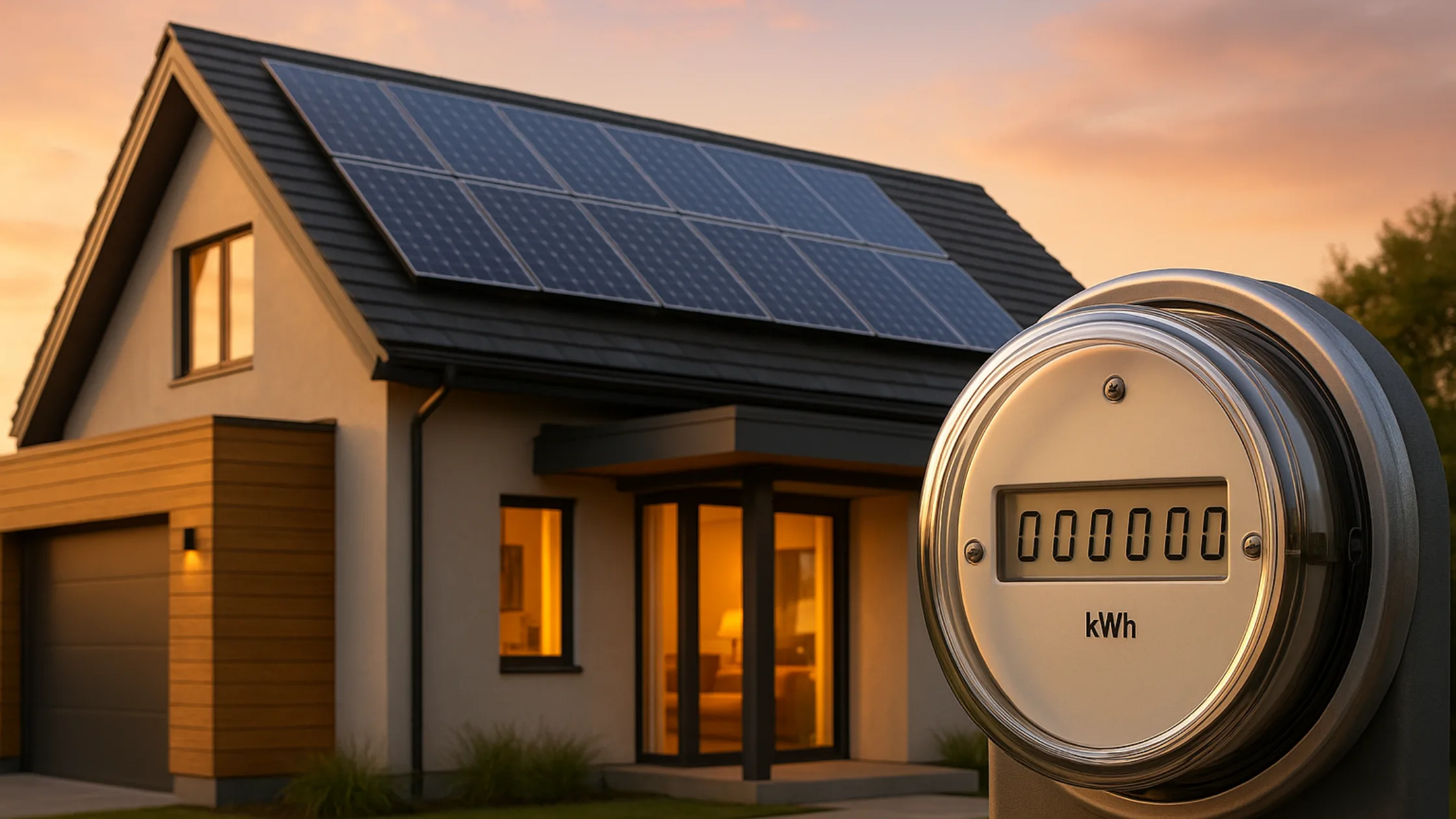
Most homeowners save $100-$140 monthly on electricity after installing solar panels; that’s $1,200-$1,680 every year. Here’s exactly how solar cuts your power bill and what it costs to get started.
The Problem: Your Electric Bill Keeps Rising
Electricity rates jumped faster in 2023 than they have in 40 years. Add extreme heat waves and you’re paying premium rates during peak hours (4-9 PM) when you need power most. The solution isn’t just using less energy; it’s paying less per kilowatt-hour.
How Solar Cuts Your Power Bill
Solar panels generate electricity during the day when the sun shines. Instead of buying all your power from the utility company at 15-27 cents per kilowatt-hour, you’re producing your own at 6-14 cents per kWh. That’s a 50%+ reduction in your electricity cost.
Here’s what happens:
- Your panels produce power during sunny days
- Excess energy gets sent back to the grid (you earn credits through net metering)
- You use those credits at night or on cloudy days
- Your electric bill drops to just the basic service fee, or close to it
Most homeowners see their bills drop 40-70%, with some paying almost nothing during peak summer production months.
Real Numbers: What You’ll Actually Save
A typical household spending $200 monthly on electricity saves $100-$140 after solar installation. Over the system’s 25-year lifespan, that’s $30,000-$42,000 in total savings.
Cost breakdown:
- Average 6kW solar system: $17,500 (after 30% federal tax credit)
- Generates 219,500 kWh over 25 years
- Cost per kWh: 8 cents (vs. 15-27 cents from utilities)
- Break-even point: 5-9 years
After you break even, the remaining 16-20 years are pure savings.
What About Upfront Costs?
Solar systems typically cost $15,000-$25,000 before incentives. The 30% federal tax credit (available through 2032) brings this down to $10,500-$17,500. Many states offer additional rebates; California’s SGIP and New York’s 25% state credit can save you thousands more.
Financing options let you start with $0 down, and your monthly solar payment is often lower than your current electric bill.
Battery Storage: Maximum Savings
Adding a battery system (around $8,000-$15,000) stores excess solar energy for nighttime use. This means you avoid peak-hour rates entirely and have backup power during outages. While it adds upfront cost, battery storage can increase your total savings by 20-30%.
Your Next Steps
Ready to see your personalized savings? Here’s what to do:
- Get 3 free quotes from certified solar installers in your area
- Compare total costs including available incentives
- Review financing options (cash, loan, or lease)
- Check your roof compatibility and sunlight exposure
Most installers offer free consultations and savings calculators that show your exact monthly savings based on your current electric bill.
Common Questions
Will solar work on cloudy days?
Yes. Panels generate electricity even on overcast days, just at reduced capacity. Most systems are sized to account for seasonal variations.
What if I don’t use all the power I generate?
Net metering credits roll over month-to-month. Excess credits typically reset annually, so systems are sized to match your yearly usage.
Do I still need the electric grid?
Most homeowners stay grid-connected for reliability. Your system automatically switches between solar, battery (if installed), and grid power.
How long do solar panels last?
Quality panels come with 25-year warranties and often produce power for 30+ years. Efficiency drops slightly over time (about 0.5% per year).
Ready to cut your power bill in half?
Get your free solar quotes and personalized savings estimate today. Compare offers from top-rated local installers with no obligation, and most consultations take 30 minutes or less.
Disclosure: We may earn a commission from qualified solar providers at no cost to you. We only recommend certified installers with proven track records.
In another related article, The Hidden Benefits of Going Solar (Beyond Energy Savings)