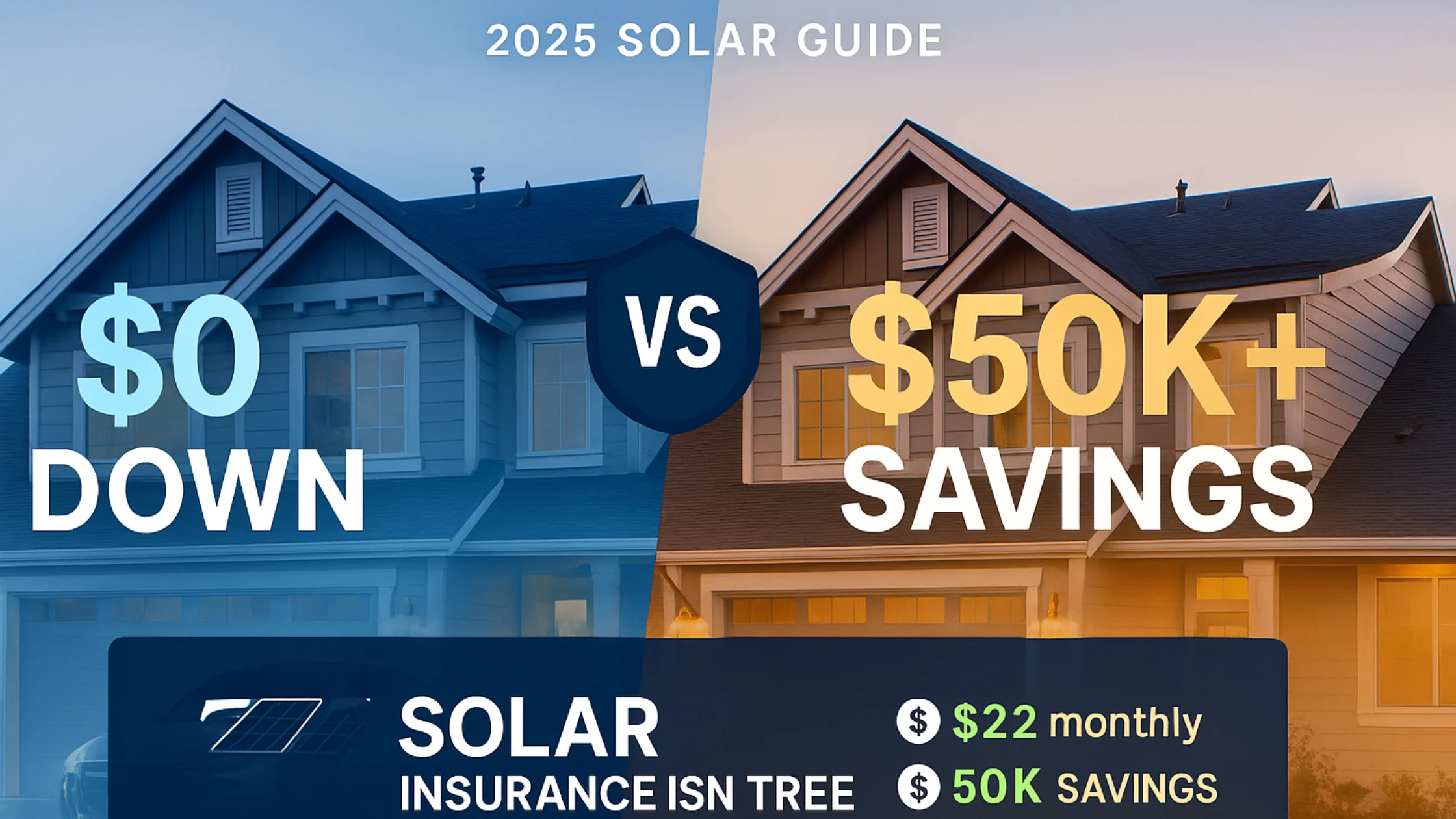
Most homeowners save $20,000-$50,000 over 25 years by going solar but choosing between buying and leasing determines exactly how much lands in your pocket.
The Real Question: Cash Flow or Maximum Savings?
Deciding between leasing and buying solar panels isn’t about which is “better”; it’s about what matters most to you right now. Want the biggest lifetime savings? Buying wins. Need zero upfront cost and immediate bill reduction? Leasing makes sense.
Here’s exactly what each option costs and saves you.
Quick Comparison: At a Glance
| Factor | Buying (Cash/Loan) | Leasing/PPA |
| Upfront Cost | $30,000 avg. or $0 with loan | $0 |
| Monthly Payment | $0 (cash) or $220-$350 (loan) | Lower than current bill, increases 1-3% yearly |
| 25-Year Savings | $40,000-$60,000+ | $15,000-$30,000 |
| Own the System | Yes | No (company owns it) |
| Home Value Boost | Up to $79,000 | None |
| Maintenance | Your responsibility | Company handles it |
Buying Solar: Higher Savings, More Control
If you buy with cash: You’ll pay around $30,000 upfront (after the federal tax credit expires at the end of 2025, costs may be higher). Your only ongoing cost is a much lower utility bill. Most systems pay for themselves in 7-10 years, then it’s pure savings for 15+ years.
If you buy with a loan: Monthly payments typically run $220-$350 depending on your credit score and loan terms. The good news? Your electricity savings often exceed your payment from day one, creating immediate positive cash flow. Once paid off, the system is yours and so are all future savings.
Key benefits of buying:
- Highest total savings over 25-30 years
- Increases home resale value by 5-10% on average
- You own the equipment and control what happens to it
- Access to state and local incentives (where available)
- Easier home sale process: owned systems are attractive to buyers
The catch: You need available capital or good credit for a loan. You’re also responsible for maintenance, though modern panels require minimal upkeep and come with 25-30 year warranties.
Leasing Solar: Zero Down, Immediate Savings
How it works: A solar company installs panels on your roof at no cost to you. You pay a monthly fee (typically lower than your current electric bill) to use the electricity they generate.
With a lease: You pay a fixed monthly amount regardless of how much electricity you use.
With a PPA (Power Purchase Agreement): You pay only for the electricity the panels actually produce, at a fixed rate per kilowatt-hour.
Key benefits of leasing:
- $0 upfront cost, start saving immediately
- Company handles all maintenance and repairs
- No tax liability needed to benefit
- Simple application, often approved same-day
- Good option if you can’t access tax incentives
The catch: Your total savings are significantly lower than owning. Most leases include 1-3% annual payment increases (escalator clauses) that eat into savings over time. You don’t own the system, so no home value increase. And selling your home requires either buying out the lease or transferring it to the new owner, which some buyers resist.
Breaking Down the Real Costs
Buying costs $30,000 on average, but remember:
- Cash buyers have zero monthly payments forever
- Loan buyers pay $220-$350/month for 10-25 years, then own it free and clear
- Typical payback period: 7-10 years
- After payback, enjoy 15-20 years of nearly free electricity
Leasing costs $0 upfront, but:
- You’ll pay monthly for 20-25 years
- Payments increase 1-3% annually with most contracts
- At the lease’s end, you don’t own anything (must renew, buy out, or remove panels)
- Lower long-term savings due to ongoing payments
Which Option Is Right for You?
Choose buying if you:
- Have cash available or can qualify for a loan
- Want maximum lifetime savings
- Plan to stay in your home 7+ years
- Want to increase your home’s value
- Prefer full ownership and control
Choose leasing if you:
- Can’t access $30,000 or don’t want to finance
- Have limited tax liability to benefit from credits
- Want $0 down and immediate bill reduction
- Prefer someone else handling maintenance
- Value simplicity over maximum returns
- Don’t plan to stay in your home long-term
The Bottom Line
For most homeowners, buying delivers $20,000-$30,000 more in lifetime savings than leasing. But leasing still saves you money compared to doing nothing, just less of it.
The right choice depends on your financial situation today and your plans for tomorrow.
Get Your Free Solar Savings Estimate
See exactly how much you could save with solar buying or leasing based on your roof, location, and electricity usage.
Compare personalized quotes from vetted local installers in minutes. No pressure, no obligation.
Compare options side-by-side and choose the financing that works for your budget and goals.
FAQ
Can I switch from a lease to buying later?
Yes, most leases include buyout options after 5-7 years. Check your contract for specific terms and pricing; some companies charge premiums above remaining payments.
What happens to my lease if I sell my home?
You can either buy out the remaining lease or transfer it to the new homeowner (if they qualify and agree). Many buyers accept lease transfers, but it can extend your sale timeline.
Do leased panels really save me money?
Yes, most homeowners save $50-$150+ per month even with lease payments. Just remember your total 25-year savings will be significantly less than if you owned the system.
Is the federal tax credit still available?
For purchased systems, the federal solar tax credit expires after December 31, 2025, and limited installer capacity makes it nearly impossible for most homeowners to install in time. However, leased systems still qualify; the leasing company claims it and may pass some savings to you through lower rates.
What if my panels need repairs?
With a lease, the company handles all maintenance and repairs at no cost to you. If you own your system, you’re responsible, but equipment warranties (25-30 years) cover most issues.
Can I get solar with bad credit?
Leasing companies often approve applications with lower credit scores than loan lenders require. Some leases need no credit check at all, making solar accessible even if financing isn’t an option.
Affiliate Disclosure: This article may contain links to solar providers and financing partners. We may receive compensation if you choose to work with these companies, at no additional cost to you. Our recommendations are based on value to homeowners, not commission rates.
In another related article, The Hidden Benefits of Going Solar (Beyond Energy Savings)