
Introduction: When Your Home Is Worth Less Than You Owe
Imagine this: You purchased your home at what seemed like the perfect time. You made your down payment, signed the mortgage paperwork, and began building what you believed would be your most valuable financial asset. Then the market shifted. Property values declined. And now, years later, you owe more on your mortgage than your home is currently worth.
This situation — commonly called being “underwater,” “upside-down,” or having “negative equity” — is more common than most people realize. Millions of American homeowners have experienced it at some point, particularly in the aftermath of the 2008 housing crisis and during regional market corrections that continue to occur in various parts of the country.
If you are in this position right now, you are probably asking a very important question: Can I still refinance?
The short answer is: it depends — but in many cases, yes, you can.
The longer answer involves understanding exactly what being underwater means, what options are available to you, which programs you may qualify for, and what strategies make the most sense given your specific financial situation.
This comprehensive guide covers all of it. By the time you reach the end, you will have a clear picture of your refinancing options and a practical roadmap for taking action.
What Does It Mean to Be Underwater on Your Mortgage?
Before exploring your options, it is worth making sure you fully understand what being underwater on a mortgage actually means — and how it happens.
Defining Negative Equity
You are underwater on your mortgage when the outstanding loan balance exceeds the current market value of your home.
The basic formula:
Equity = Current Home Value − Outstanding Mortgage Balance
When this calculation produces a negative number, you have negative equity — you are underwater.
Example:
- Current home value: $240,000
- Outstanding mortgage balance: $295,000
- Equity: −$55,000
In this example, even if you sold your home at full market value, you would still owe the lender $55,000 after the sale. That shortfall is what makes being underwater so financially dangerous.
Loan-to-Value Ratio (LTV)
Lenders use a related metric called the Loan-to-Value (LTV) ratio to assess this situation. LTV is expressed as a percentage:
LTV = (Outstanding Loan Balance ÷ Home Value) × 100
Using the example above:
($295,000 ÷ $240,000) × 100 = 122.9% LTV
A standard, healthy mortgage has an LTV of 80% or lower. Government-backed programs and some conventional refinances allow up to 97% LTV. An LTV above 100% means you are underwater.
How Do Homeowners End Up Underwater?
Understanding how negative equity happens helps you figure out which recovery strategy is most appropriate for your situation. There are several common causes:
1. Declining Property Values
The most straightforward cause. If you bought at or near the peak of a real estate market cycle and values subsequently declined — due to a recession, neighborhood deterioration, oversupply of housing, or broader economic forces — your home may now be worth less than when you purchased it.
2. Minimal Down Payment at Purchase
Buyers who put down very little (3%, 3.5%, or even 0% for VA and USDA loans) start with very little equity. Even a modest decline in home values can push these borrowers underwater quickly.
3. Cash-Out Refinancing
Homeowners who aggressively tapped their home equity through cash-out refinances during periods of rising values can find themselves underwater if values later drop. They extracted equity when it was high, and then that equity evaporated.
4. Depreciation in Specific Markets
Even in a nationally strong housing market, certain regional or local markets can experience significant value declines. Economic downturns in specific cities, plant or employer closures, natural disasters, and demographic shifts can all depress local property values dramatically.
5. Depreciation of Property Type
Certain property types — condos in oversupplied markets, manufactured homes, properties with structural or environmental issues — may decline in value while surrounding single-family homes hold steady.
Why Refinancing While Underwater Is Challenging
Under normal circumstances, refinancing requires you to have positive equity in your home. Here is why:
When a lender approves a mortgage or refinance, they are essentially making a secured loan — the home itself serves as collateral. If you default, the lender can foreclose and sell the property to recover their money. But if the property is worth less than the loan balance, the lender cannot fully recover their investment through foreclosure. This makes underwater mortgages significantly riskier for lenders.
As a result, most conventional lenders simply will not approve a refinance application when the LTV exceeds 100%. The risk calculation does not work in their favor.
Additionally, standard appraisal processes will confirm the negative equity situation, making it impossible to gloss over the problem when applying for a traditional refinance.
But here is the thing: traditional lending is not your only option. There are specific programs, strategies, and lender arrangements designed precisely for borrowers in your situation.
Your Refinancing Options When Underwater
Option 1: Fannie Mae High LTV Refinance Option (HIRO)
The High LTV Refinance Option (HIRO) is a program offered through Fannie Mae designed specifically for homeowners who are current on their mortgage payments but have little or no equity, including those who are underwater.
Key Features of HIRO:
- Your current loan must be owned or guaranteed by Fannie Mae
- Your mortgage must have been originated on or after October 1, 2017
- You must be current on your payments — no missed payments in the past six months, and no more than one missed payment in the past 12 months
- Your LTV must be greater than 97.01% (meaning you have less than 3% equity or are underwater)
- There is no maximum LTV cap — even deeply underwater borrowers may qualify
- You must have a tangible benefit from refinancing, such as a lower interest rate, reduced monthly payment, or a switch from an adjustable-rate to a fixed-rate mortgage
Benefits of HIRO:
- Lower interest rate without needing significant equity
- Reduced paperwork compared to traditional refinances (limited income and asset verification in many cases)
- No new appraisal required in many instances (using automated valuation)
- Ability to roll in closing costs
How to Check Eligibility:
Visit the Fannie Mae Loan Lookup tool at fanniemae.com to verify whether your current mortgage is owned by Fannie Mae. If it is, contact an approved Fannie Mae lender to begin the HIRO application process.
Option 2: Freddie Mac Enhanced Relief Refinance (FMERR)
The Freddie Mac Enhanced Relief Refinance (FMERR) is Freddie Mac’s equivalent of HIRO. It serves homeowners whose mortgages are owned by Freddie Mac and who have insufficient equity to qualify for a traditional refinance.
Key Features of FMERR:
- Your current loan must be owned by Freddie Mac
- Originated on or after November 1, 2018
- Must be current on payments — same payment history requirements as HIRO
- LTV must exceed 97.01% for single-family primary residences
- No maximum LTV limit
- Must demonstrate a tangible benefit from the refinance
Benefits of FMERR:
- Similar to HIRO — lower rates, simplified documentation, no maximum LTV
- Can refinance from ARM to fixed-rate
- Flexible on appraisal requirements
How to Check Eligibility:
Use the Freddie Mac Loan Lookup tool at freddiemac.com to determine if your loan is held by Freddie Mac.
Important Note: HIRO and FMERR are successors to the famous HARP program (Home Affordable Refinance Program) that helped millions of homeowners after the 2008 financial crisis. HARP expired in December 2018, but HIRO and FMERR serve a very similar purpose for eligible borrowers today.
Option 3: FHA Streamline Refinance
If your current mortgage is an FHA loan, you may be eligible for the FHA Streamline Refinance — one of the most borrower-friendly refinancing programs available.
Key Features of FHA Streamline Refinance:
- Available only to borrowers with existing FHA loans
- No appraisal required — the biggest advantage for underwater borrowers, since the current home value is essentially irrelevant
- Limited income and employment verification — less documentation required
- Must be current on your FHA mortgage (no late payments in the past three months)
- Must have made at least six payments on the existing FHA loan
- Must result in a net tangible benefit — typically a reduction in monthly payment of at least 5%
Benefits for Underwater Borrowers:
Because the FHA Streamline Refinance does not require a new appraisal, your negative equity does not block you from refinancing. Your new loan is based on the original appraised value or purchase price, making the current market value of the home largely irrelevant. This is an enormous advantage for underwater FHA borrowers.
Things to Know:
- You will pay an upfront Mortgage Insurance Premium (MIP) on the new loan, though a portion of the original MIP may be refunded
- You continue paying the monthly MIP for the life of the loan (unless you put down 10% or more originally)
- The new loan must offer a lower rate or a switch from ARM to fixed
Option 4: VA Interest Rate Reduction Refinance Loan (IRRRL)
If you are a veteran or active-duty service member with an existing VA loan, the VA IRRRL — commonly called the VA Streamline Refinance — is arguably the best refinancing option available for underwater borrowers.
Key Features of VA IRRRL:
- Available only to borrowers with existing VA loans
- No appraisal required — your LTV ratio is irrelevant
- No income verification in most cases
- Must be current on your VA mortgage
- The new loan must have a lower interest rate than the existing one (with limited exceptions for switching from ARM to fixed)
- No out-of-pocket costs are required — closing costs can be rolled into the loan
Benefits for Underwater Borrowers:
Like the FHA Streamline, the VA IRRRL completely sidesteps the equity problem by not requiring an appraisal. Veterans who are deeply underwater on their VA loans can still refinance to a lower rate and reduce their monthly payments — without putting up any cash and without the market value of their home being a barrier.
If you have a VA loan and are underwater, this is almost certainly your best first option. The VA IRRRL is fast, inexpensive, and one of the most streamlined refinancing processes in the mortgage industry.
READ ALSO: How to Refinance While Going Through a Divorce: A Complete Guide
Option 5: USDA Streamlined Refinance
If your original mortgage was a USDA Rural Development loan, you may be eligible for the USDA Streamlined Refinance or USDA Streamlined-Assist Refinance program.
Key Features:
- Available only to borrowers with existing USDA Direct or Guaranteed loans
- The Streamlined-Assist version (the most popular) does not require a new appraisal
- Must have made 12 consecutive on-time payments before applying
- Must result in a $50 per month minimum reduction in the principal and interest payment
- No credit score requirement for the Streamlined-Assist version
- Property must still be in an eligible rural area
Benefits for Underwater Borrowers:
The Streamlined-Assist program’s no-appraisal feature means negative equity is not a disqualifier. For rural homeowners with USDA loans who are struggling with high interest rates, this program can provide significant monthly savings.
Option 6: Contact Your Current Lender Directly
If none of the above program-based options apply to your situation, it is worth contacting your current mortgage servicer directly to discuss your options. Lenders generally prefer to avoid foreclosure — the process is expensive, time-consuming, and results in losses for the lender when property values are depressed.
Options your lender may offer include:
Loan Modification
Rather than a full refinance, a loan modification permanently changes the terms of your existing loan. This might include:
- Reducing the interest rate
- Extending the loan term to lower monthly payments
- Adding missed payments to the loan balance (forbearance resolution)
- In rare cases, reducing the principal balance
Loan modifications are typically available to borrowers who are experiencing genuine financial hardship — not just those who want a lower rate. You will need to document your hardship and demonstrate that you cannot sustain current payments without assistance.
Principal Reduction Programs
Some lenders — particularly under regulatory agreements or settlement programs — have offered principal reduction to deeply underwater borrowers. This means the lender literally writes down a portion of the loan balance, bringing it closer to the home’s actual value.
Principal reductions are not widely available through standard channels today, but they may be worth asking about, particularly if your loan is serviced by one of the major banks that participated in post-crisis settlement agreements.
Option 7: Bring Cash to the Table
If you do not qualify for any streamlined program and your lender will not modify your loan, one option is to pay down your principal balance at closing to reduce your LTV to a level that qualifies for a traditional refinance.
For example, if your home is worth $240,000 and you owe $295,000, you could theoretically bring $55,000 in cash to reduce the balance to $240,000 (100% LTV), and then potentially qualify for a refinance — though most lenders want to see at least 80% to 95% LTV.
This option is rarely practical, as most underwater homeowners do not have tens of thousands of dollars in liquid assets. However, if you have received an inheritance, a bonus, or other windfall, applying it toward your mortgage to reach a refinanceable LTV level may be worth considering.
What If You Simply Cannot refinance?
If none of the above options apply and you are unable to refinance, you still have choices. Here is what to consider:
Option A: Ride It Out
If you can afford your current mortgage payments and plan to stay in the home long-term, the most straightforward strategy is simply to keep making payments and wait for home values to recover.
Real estate markets are cyclical. What goes down typically comes back up, given enough time. If you are underwater by a modest amount — say, 10% to 20% — a few years of normal market appreciation, combined with the principal reduction from your regular payments, may bring you back to positive equity without any extraordinary measures.
This strategy works best when:
- You have no immediate need to sell or move
- You can comfortably afford your current payments
- The local real estate market shows signs of eventual recovery
- Your mortgage rate, while higher than today’s rates, is not causing genuine financial hardship
Option B: Short Sale
If you need to sell your home but the proceeds would not cover your mortgage balance, a short sale is one option. In a short sale, your lender agrees to accept less than the full payoff amount — allowing the sale to proceed even though it does not fully repay the debt.
Short sales require lender approval and can be a lengthy, complicated process. They also have credit consequences — typically less severe than a foreclosure, but still damaging. A short sale will generally remain on your credit report for up to seven years.
However, for homeowners who must sell and have no other option, a short sale is often preferable to foreclosure. It gives you more control over the timeline and typically results in better credit recovery.
Option C: Deed-in-Lieu of Foreclosure
A deed-in-lieu of foreclosure is an arrangement where you voluntarily transfer ownership of the home to your lender in exchange for being released from the mortgage obligation. It is an alternative to formal foreclosure proceedings.
Like a short sale, a deed-in-lieu requires lender cooperation and has credit consequences — though again, generally less severe than a full foreclosure. Some lenders will also agree to waive their right to pursue the deficiency balance (the difference between what you owe and what the home is worth), though this is not guaranteed and varies by lender and state law.
Option D: Strategic Default
A strategic default is a deliberate decision to stop making mortgage payments even when you could afford to continue, typically because the financial math no longer makes sense — you are deeply underwater, you see no near-term prospect of recovery, and continued payments feel like throwing good money after bad.
Strategic default is controversial — ethically, financially, and legally. The consequences are severe:
- Significant, long-lasting damage to your credit score
- Potential foreclosure proceedings and a public record
- Possible deficiency judgment in some states, where the lender sues you for the remaining balance after selling the foreclosed property
- Tax consequences — forgiven debt may be treated as taxable income (though exclusions may apply)
Strategic default is a last resort, and the decision should only be made after consultation with a housing counselor, attorney, and financial advisor who can fully explain the consequences in your specific state.
How to Determine Which Option Is Right for You
With so many potential paths forward, how do you decide where to start? Here is a simple framework:
Step 1: Identify Your Loan Type
Check your mortgage statement or contact your servicer to determine whether your loan is:
- Owned by Fannie Mae → Consider HIRO
- Owned by Freddie Mac → Consider FMERR
- An FHA loan → Consider FHA Streamline Refinance
- A VA loan → Consider VA IRRRL
- A USDA loan → Consider USDA Streamlined-Assist
If none of these apply, you have a conventional loan not backed by Fannie Mae or Freddie Mac, which narrows your options considerably.
Step 2: Check Your Payment History
All streamlined refinance programs require you to be current on your mortgage. If you have missed payments, your priority should be getting current before applying for any refinance program. Contact your servicer about forbearance or repayment plans if needed.
Step 3: Calculate Your LTV
Use a current home value estimate (from Zillow, Redfin, or a local real estate agent’s market analysis) along with your current mortgage statement to calculate your approximate LTV. This gives you a starting point for understanding your level of negative equity.
Step 4: Assess Your Financial Goals
Are you trying to:
- Lower your monthly payment? A streamlined refinance or loan modification may be sufficient.
- Switch from ARM to fixed? Many streamlined programs allow this.
- Access cash? This is very difficult when underwater and is generally not possible without bringing equity to the table.
- Sell the home? Focus on short sale or deed-in-lieu conversations with your lender rather than refinancing.
Step 5: Get Professional Guidance
A HUD-approved housing counselor can provide free or low-cost guidance on all of these options. Call 1-800-569-4287 to find a HUD-approved counselor near you. They are impartial, do not charge mortgage-broker fees, and can help you understand every available option based on your specific situation.
Steps to Take Right Now If You Are Underwater
Here is a practical action plan you can begin implementing immediately:
- Pull your current mortgage statement to confirm your outstanding balance, loan type, and servicer information.
- Get a home value estimate from multiple sources — Zillow, Redfin, and a local real estate agent’s comparable market analysis — to understand your approximate current market value.
- Calculate your LTV using the formula above to understand how underwater you are.
- Run the Fannie Mae and Freddie Mac loan lookup tools to determine who owns your loan.
- Contact a HUD-approved housing counselor or a reputable mortgage professional to discuss your specific situation and which programs you may qualify for.
- Review your credit report at AnnualCreditReport.com to check for errors and understand your current credit standing.
- Document your income and assets — pay stubs, bank statements, tax returns — so you are ready to move quickly once you identify the right program.
- Consult an attorney if you are considering a strategic default, deed-in-lieu, or short sale to fully understand the legal and tax ramifications in your state.
Frequently Asked Questions
How far underwater do you have to be before refinancing becomes impossible?
There is no universal threshold. Government-backed streamlined programs (FHA, VA, USDA) often have no maximum LTV cap, making even deeply underwater borrowers eligible — provided they have the right loan type and a clean payment history. HIRO and FMERR also have no maximum LTV cap. For conventional borrowers without these options, even being slightly underwater (LTV above 100%) typically disqualifies them from standard refinancing.
Does being underwater affect your credit score directly?
No, negative equity itself does not appear on your credit report and does not directly affect your score. Your credit score is affected by your payment behavior, not your equity position. Staying current on a mortgage, even when underwater, actually helps your credit score. It is only when you begin missing payments or pursue a short sale, deed-in-lieu, or foreclosure that credit damage occurs.
Can I do a cash-out refinance if I am underwater?
No. A cash-out refinance requires you to have equity — you are borrowing against the equity in your home. If you are underwater, there is no equity to borrow against, and no lender will approve a cash-out refinance in this situation.
Is there a new HARP program for 2024 and 2025?
HARP expired in December 2018 and has not been reinstated. Its successors — HIRO (Fannie Mae) and FMERR (Freddie Mac) — continue to serve a similar purpose for eligible borrowers. There have been periodic discussions in Congress about new, broader relief programs, but as of mid-2025, HIRO and FMERR remain the primary options for conventional underwater borrowers.
Will refinancing while underwater hurt my credit?
Refinancing itself — applying for a new loan — results in a hard inquiry on your credit report, which may temporarily lower your score by a small amount. This is true of any refinance, not just underwater situations. The impact is typically minor (5 points or fewer) and temporary. Completing a refinance and maintaining your new, lower payment on time is ultimately beneficial for your credit.
What happens to my second mortgage or HELOC if I refinance underwater?
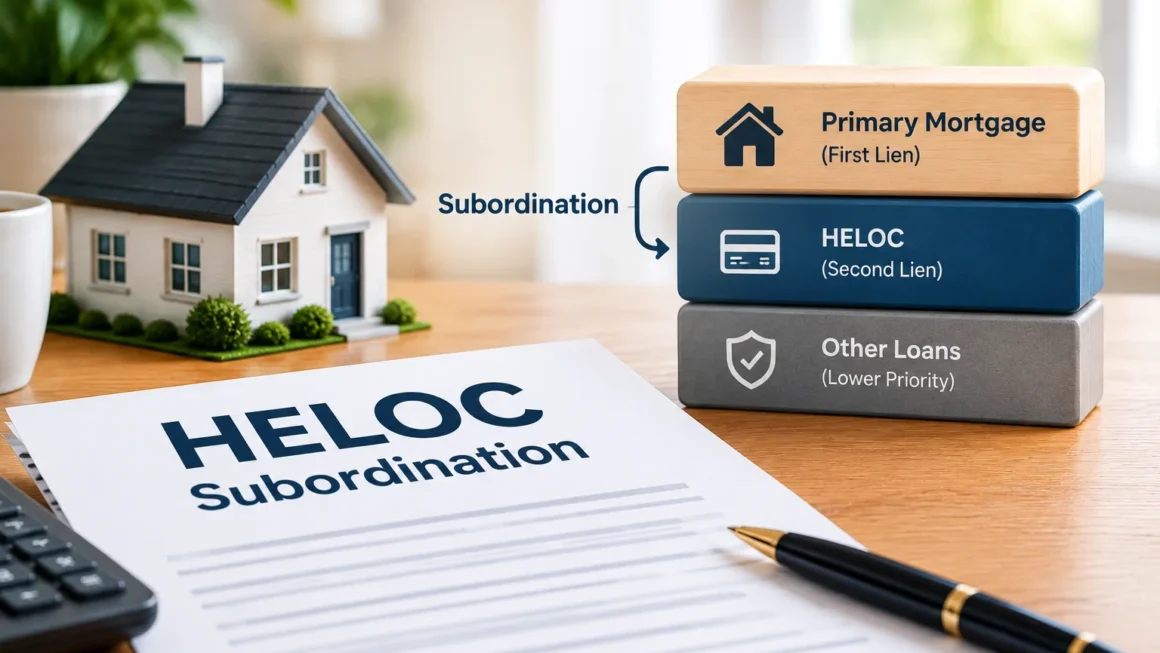
This is a complex situation. If you have a second mortgage or Home Equity Line of Credit (HELOC) in addition to your first mortgage, the second lien holder typically must agree to “subordinate” their lien (remain in second position) for the refinance to proceed. When you are underwater on the first mortgage alone — meaning the home’s value does not even cover the first mortgage — second lien subordination becomes extremely difficult to obtain. You may need to pay off or negotiate the second lien before refinancing is possible.
The Emotional Side of Being Underwater
It would be incomplete to discuss underwater mortgages purely in financial terms without acknowledging the emotional weight that comes with this situation.
Owning a home that is worth less than what you owe on it can feel deeply discouraging. It can create a sense of being trapped — unable to sell, unable to move, unable to take advantage of better financial opportunities. For many homeowners, the home represents not just a financial investment but a deeply personal commitment — a place where children grew up, where life happened.
It is important to remember several things:
First, you are not alone. Millions of homeowners have been in this exact position. The housing crisis of 2008 left nearly a quarter of all mortgaged homes in the United States underwater at its peak. Many of those homeowners stayed the course, eventually recovered their equity, and came out the other side financially intact.
Second, negative equity is a temporary condition, not a permanent one. Real estate markets recover. Mortgages get paid down over time. The combination of market appreciation and principal reduction eventually eliminates negative equity for homeowners who stay current and stay patient.
Third, there are real options. As this guide has outlined, there are specific programs, strategies, and resources designed precisely for your situation. You are not powerless.
Final Thoughts: Negative Equity Is Not a Dead End
Being underwater on your mortgage is one of the most stressful financial situations a homeowner can face. But it is not a dead end. It is a challenge — and like most financial challenges, it can be addressed with the right information, the right tools, and the right professional guidance.
If you have a government-backed loan (FHA, VA, USDA), your path to refinancing is likely clearer and more accessible than you think. If you have a Fannie Mae or Freddie Mac conventional loan, HIRO and FMERR may provide a route forward. If none of these apply, direct lender negotiation, loan modification, or a longer-term patience strategy may be your best course.
Whatever your situation, the worst thing you can do is nothing. Ignoring the problem does not make it smaller. Taking action — even small steps like making a phone call to a housing counselor or running the Fannie Mae loan lookup tool — puts you in a far better position than paralysis.
Start with the facts. Know your numbers. Build your team. And take the next step.
Quick Reference: Underwater Mortgage Options at a Glance
| Program | Loan Type Required | Appraisal Needed? | Max LTV | Best For |
| Fannie Mae HIRO | Fannie Mae conventional | Often waived | None | Conventional borrowers, any LTV |
| Freddie Mac FMERR | Freddie Mac conventional | Often waived | None | Conventional borrowers, any LTV |
| FHA Streamline Refinance | Existing FHA loan | Not required | None | FHA borrowers, any LTV |
| VA IRRRL | Existing VA loan | Not required | None | Veterans with VA loans |
| USDA Streamlined-Assist | Existing USDA loan | Not required | None | Rural USDA borrowers |
| Loan Modification | Any (lender discretion) | Varies | Varies | Hardship situations |
| Short Sale | Any | N/A | N/A | Must sell, cannot pay off mortgage |
| Deed-in-Lieu | Any (lender approval) | N/A | N/A | Last resort before foreclosure |