There is a quiet financial crisis unfolding in millions of American households, and it does not make the evening news. It shows up instead as a creeping anxiety — the kind that tightens in your chest when you open your credit card statement and see that despite making payments every single month, your balance has barely moved. The interest keeps compounding. The minimum payments keep getting larger. And the dream of actually being debt-free feels like it is moving further away, not closer.
If you own a home and have built up meaningful equity, you may be sitting on a solution that most people never fully consider: using a mortgage refinance to eliminate high-interest debt.
The concept is straightforward. You refinance your home for more than you currently owe, use the difference to pay off high-interest debts in full, and consolidate everything into a single, lower-rate monthly payment. Done correctly, it can save tens of thousands of dollars in interest, dramatically simplify your financial life, and create the breathing room needed to finally build lasting wealth.
Done incorrectly — without a clear plan, without understanding the risks, and without addressing the habits that created the debt in the first place — it can leave you worse off than when you started.
This guide covers everything you need to know: how the strategy works, when it makes sense, the math behind it, the risks you must respect, and the step-by-step approach to executing it successfully.
Understanding the Core Strategy: Cash-Out Refinancing for Debt Consolidation
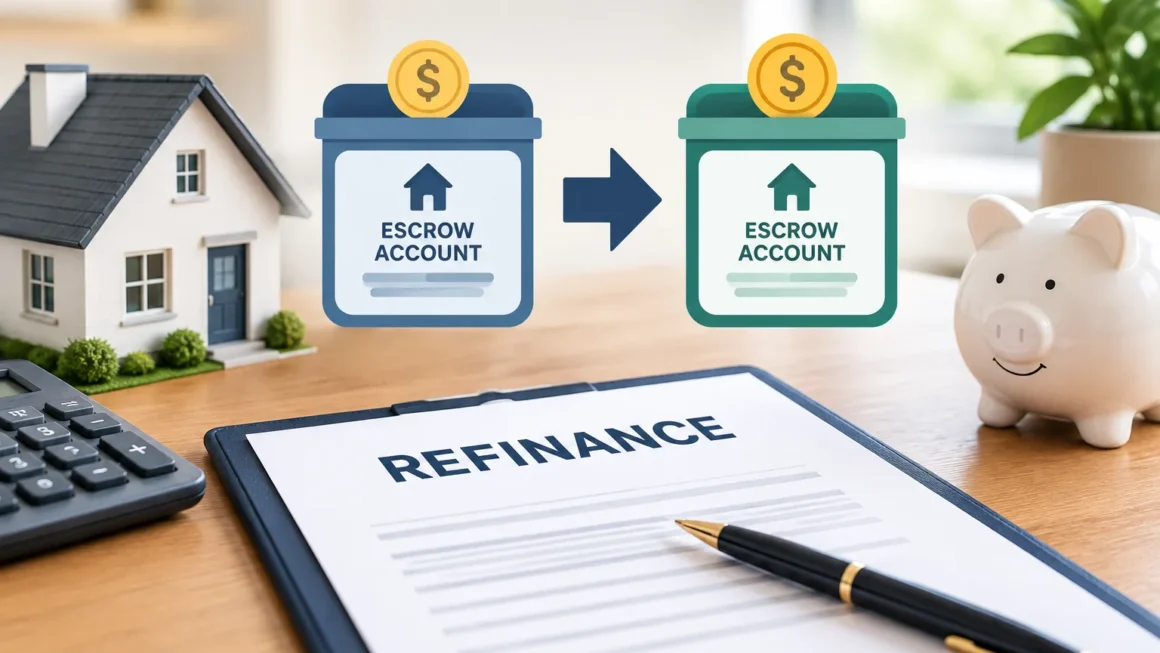
The primary vehicle for rolling high-interest debt into your mortgage is the cash-out refinance.
Here is how it works:
Your home is currently worth $380,000. You owe $220,000 on your existing mortgage. That gives you $160,000 in equity. Most lenders will allow you to refinance up to 80% of your home’s appraised value, which means you can refinance up to $304,000.
Your new loan: $304,000 Your existing mortgage payoff: $220,000 Cash available to you at closing: $84,000
That $84,000 does not come to you as spending money. It is strategically directed — in a lump sum at closing — toward paying off the high-interest debts that have been bleeding your monthly cash flow.
The result: your credit cards are zeroed out. Your personal loans are eliminated. Your medical bills are gone. And instead of juggling five or six different payments at interest rates ranging from 18% to 29%, you have one mortgage payment at a rate that, even in a higher-rate environment, is often 60–70% lower than what you were paying on revolving debt.
That is the promise of this strategy. And for the right borrower in the right situation, it delivers.
The Math That Makes This Strategy Compelling
To truly appreciate why debt consolidation through refinancing works, you need to see the numbers side by side. Abstract concepts rarely motivate change. Real numbers do.
A Realistic Debt Scenario
Meet a hypothetical homeowner — let us call her Maria. She owns a home worth $380,000, owes $220,000 on her mortgage at 6.75%, and is drowning in the following unsecured debt:
| Debt | Balance | Interest Rate | Minimum Payment |
| Credit Card 1 | $14,500 | 24.99% | $362 |
| Credit Card 2 | $8,200 | 21.49% | $205 |
| Credit Card 3 | $6,000 | 19.99% | $150 |
| Personal Loan | $12,000 | 16.5% | $294 |
| Medical Bills | $4,300 | 0% (collection threat) | $215 |
| Total | $45,000 | Blended ~21% | $1,226/month |
Maria is paying $1,226 per month just to service her unsecured debt — and barely making a dent in the principal. At these rates and minimum payments, it would take her over 14 years to pay off this debt, and she would pay approximately $31,000 in interest along the way.
After the Cash-Out Refinance
Maria refinances her home at $265,000 — enough to pay off her existing mortgage ($220,000) and all $45,000 in unsecured debt. Her new loan at a 7.25% rate on a 30-year term looks like this:
- New mortgage payment: $1,809/month (principal + interest)
- Previous mortgage payment: $1,431/month
- Increase in mortgage payment: $378/month
But here is the critical comparison:
- Debt payments eliminated: $1,226/month
- Mortgage payment increase: $378/month
- Net monthly cash flow improvement: $848/month
Maria has freed up $848 every single month. That is more than $10,000 per year in restored cash flow — money she can direct toward building an emergency fund, maxing out her retirement contributions, investing, or aggressively paying down her new mortgage ahead of schedule.
The blended interest rate on her $45,000 in debt was approximately 21%. Her new mortgage rate on that same consolidated amount is 7.25%. That is a rate reduction of nearly 14 percentage points — producing dramatic interest savings over the life of the debt.
When This Strategy Makes the Most Sense
Debt consolidation through refinancing is not a one-size-fits-all solution. It works powerfully in specific circumstances and poorly — or dangerously — in others. Here are the conditions where this strategy genuinely shines.
1. You Have Significant High-Interest Debt
The strategy produces the biggest benefit when the interest rate gap between your mortgage and your existing debt is large. If your credit cards are charging you 22–29% and your refinance rate is 7–8%, the arbitrage is massive. If your existing debt carries rates of 10–12%, the math becomes less compelling, and the risks may not be worth it.
As a general guideline, this strategy makes strong financial sense when your high-interest debt carries rates at least 10–12 percentage points above your expected refinance rate.
2. You Have Sufficient Home Equity
Most lenders require that you retain at least 20% equity in your home after the cash-out refinance. This means you need enough equity to both cover the cash-out amount and maintain that 20% cushion.
If your home is worth $380,000 and you need 20% equity ($76,000) remaining, your maximum new loan is $304,000. If you currently owe $220,000, you have $84,000 in accessible cash — enough to handle Maria’s scenario comfortably. Borrowers with less equity have less flexibility, and those with less than 20% equity may face private mortgage insurance (PMI) requirements, which erodes the benefit.
3. Your Credit Score Qualifies You for a Competitive Rate
The interest rate you receive on your refinance determines how much of the benefit you capture. A borrower with a 760+ credit score will receive a meaningfully better rate than a borrower with a 650. Before assuming the math works, get actual rate quotes based on your real credit profile. A rate that is 1% higher than you expected can significantly narrow the benefit gap.
Ideally, you want a minimum credit score of 680–700 to access reasonably competitive refinance rates, and 740 or higher to qualify for the best available rates.
4. You Plan to Stay in the Home Long Enough
Refinancing comes with closing costs — typically 2–5% of the new loan amount. On a $265,000 refinance, that is $5,300 to $13,250 in upfront costs. These costs are either paid out of pocket at closing or rolled into the new loan (which increases your balance and interest costs slightly).
You need to stay in your home long enough for the monthly savings to offset these closing costs. This is called the break-even point.
If your net monthly savings are $848 and your closing costs are $8,000:
$8,000 ÷ $848 = 9.4 months to break even
In Maria’s case, the break-even is less than 10 months — a very favorable timeline. If you plan to sell or move within one to two years, the math may not work in your favor.
5. You Are Ready to Change the Habits That Created the Debt
This is the condition that is most frequently glossed over — and the one that matters most for long-term success. We will address it in detail later in this article.
Types of Refinancing Used for Debt Consolidation
While the cash-out refinance is the most common tool, there are several refinancing structures worth understanding.
Cash-Out Refinance
As described above, you refinance for more than you owe, receive the difference in cash at closing, and use it to pay off debts. This is the most straightforward approach and gives you the most control over which debts you eliminate.
Best for: Borrowers with substantial equity and significant high-interest debt balances.
Rate-and-Term Refinance Combined with a HELOC
Some borrowers use a rate-and-term refinance to lower their primary mortgage rate while simultaneously opening a HELOC to access equity for debt payoff. This approach keeps the primary mortgage lean while using the HELOC’s flexibility to address debt strategically.
Best for: Borrowers who want flexibility in how they access and repay the equity, or who anticipate needing access to credit beyond a one-time payoff.
FHA Cash-Out Refinance
For borrowers with FHA-insured mortgages or those who need more flexible qualification standards, an FHA cash-out refinance allows you to borrow up to 80% of your home’s appraised value with a minimum credit score of 600. The trade-off is the FHA mortgage insurance premium (MIP), which adds to your monthly cost.
Best for: Borrowers with credit scores in the 600–680 range who do not qualify for conventional cash-out refinancing at competitive rates.
VA Cash-Out Refinance
Eligible veterans and active-duty service members can use a VA cash-out refinance to access up to 100% of their home’s value in some cases — the most generous equity access of any loan program. There is no monthly mortgage insurance, and VA rates are typically among the lowest available.
Best for: Veterans and service members with meaningful equity and high-interest debt to eliminate.
The Step-by-Step Process: From Decision to Debt-Free
Step 1: Take a Complete Inventory of Your Debt
Before you speak to a single lender, know exactly what you owe. Create a complete debt inventory that includes every balance, interest rate, minimum payment, and remaining payoff timeline. Include credit cards, personal loans, medical debt, student loans, car loans, and any other obligations you are considering consolidating.
This inventory serves two purposes: it gives you clarity on the total cash you need to request, and it forces you to confront the full picture of your debt — often a surprisingly motivating exercise.
Step 2: Calculate Your Home’s Equity Position
Estimate your home’s current market value using recent comparable sales in your neighborhood, an online valuation tool, or a conversation with a local real estate agent. Subtract your current mortgage balance to determine your approximate equity, then apply the 80% LTV rule to estimate your maximum cash-out potential.
Maximum Cash-Out = (Home Value × 0.80) – Current Mortgage Balance
If this number is less than your total debt, you will need to prioritize which debts to eliminate — focus on the highest-rate balances first for maximum interest savings.
Step 3: Check and Optimize Your Credit Score
Pull your credit reports from all three bureaus (Equifax, Experian, and TransUnion) at AnnualCreditReport.com. Look for errors, dispute any inaccuracies, and address any easy wins that can boost your score before you apply.
Common score-boosting actions to take 60–90 days before applying:
- Pay down credit card balances below 30% of each card’s limit
- Avoid opening any new credit accounts
- Do not close old accounts (this shortens your credit history)
- Dispute any inaccurate negative items in writing
Even a 20-point improvement in your credit score can translate to a meaningfully better interest rate on a six-figure loan — potentially saving thousands over the life of the mortgage.
Step 4: Shop Multiple Lenders and Compare Loan Estimates
Do not accept the first refinance offer you receive. Get quotes from at least three to five lenders — including your current mortgage servicer, a large national bank, a credit union, and an online mortgage lender. Each lender must provide you with a standardized Loan Estimate within three business days of your application, which allows for direct, apples-to-apples comparison.
When comparing offers, do not focus solely on the interest rate. Evaluate:
- The Annual Percentage Rate (APR), which includes fees and gives a truer cost picture
- Total closing costs, itemized
- Whether the rate is locked and for how long
- The loan term (30-year vs. 15-year vs. 20-year)
- Any prepayment penalties
Step 5: Apply, Provide Documentation, and Complete the Appraisal
Once you have selected your lender, the formal application process begins. You will need to provide comprehensive financial documentation, including:
- Two years of federal tax returns (W-2s or 1099s if self-employed)
- Two to three months of bank statements
- Recent pay stubs covering the last 30 days
- Current mortgage statement
- Homeowners insurance policy
- A list of all debts to be paid off at closing
Your lender will order an appraisal of your home — either a full in-person appraisal or a desktop appraisal — to establish the official market value upon which your loan is based. The appraised value determines your final maximum loan amount.
Step 6: Underwriting and Closing
Once your application, documentation, and appraisal are complete, your file moves to underwriting — the process by which the lender verifies everything and makes the final approval decision. This typically takes 2–4 weeks in normal market conditions.
At closing, you will sign your new loan documents. For owner-occupied refinances, federal law gives you a 3-day right of rescission — three business days during which you can cancel the transaction without penalty if you change your mind. After those three days, the loan funds will pay off your debts, and your new single monthly payment replaces everything else.
The Risks You Must Take Seriously
This strategy has a powerful financial case. It also carries real, serious risks that every borrower must understand with clear eyes before proceeding.
Risk 1: You Are Converting Unsecured Debt Into Secured Debt
This is the most critical risk in the entire strategy, and it deserves to be stated plainly: credit card debt cannot take your house. A mortgage can.
When you roll unsecured debt into your mortgage, you are attaching debt that previously had no collateral to your home. If you fall behind on your mortgage — for any reason — foreclosure becomes a real possibility. The stakes are categorically higher after this transaction than before it.
This risk does not mean the strategy is wrong. It means it must be executed with full awareness and a serious commitment to maintaining your mortgage payments.
Risk 2: You May Spend More in Total Interest Over Time
Here is the uncomfortable math that many debt consolidation articles bury: even at a lower rate, spreading debt over 30 years costs more in total interest than paying it off aggressively at a higher rate.
If Maria puts her $45,000 in debt into a 30-year mortgage at 7.25%, she will pay approximately $64,000 in interest on just that portion of her loan over three decades. If she had instead put her freed-up $848/month toward aggressively paying off her credit cards using the debt avalanche method, she might have eliminated the same $45,000 in debt in 3–4 years, paying a fraction of the total interest.
The counterargument — and it is a valid one — is that most people do not have the discipline to maintain aggressive debt payoff over multiple years. The cash-out refinance forces the issue by eliminating the balances immediately. And the freed-up cash flow, if redirected wisely, can produce returns that more than offset the long-term interest cost.
The keyword is if. Which brings us to the next risk.
Risk 3: The Debt Returns If Behavior Does Not Change
This is the risk that turns a smart financial strategy into a financial catastrophe for too many borrowers.
Studies on debt consolidation consistently reveal a sobering pattern: a significant percentage of borrowers who consolidate credit card debt via refinancing end up rebuilding those same credit card balances within two to five years, while now also carrying a larger mortgage. They end up with both: a bigger home loan and revived card balances. Their financial situation is demonstrably worse than before they refinanced.
The root cause is never the debt itself. It is the spending behavior and financial habits that generated the debt. A cash-out refinance addresses the symptom — the balances — without touching the cause.
Any honest treatment of this strategy must say plainly: if you do not change the habits that created the debt, refinancing will make your situation worse, not better.
Risk 4: You Reduce Your Home Equity and Increase Foreclosure Risk
Every dollar you pull out of your home in a cash-out refinance is a dollar of equity that no longer cushions you against a market downturn. If home values in your area decline 15% after you refinance, and you have already extracted most of your equity, you may find yourself underwater — owing more on your mortgage than your home is worth. This limits your options for selling, refinancing again, or accessing additional equity if you need it.
Risk 5: Closing Costs Reduce Your Net Benefit
Refinancing is not free. Closing costs of 2–5% of the loan amount are a real expense, and they reduce the net financial benefit of the transaction. On a $265,000 refinance, $10,000 in closing costs represents money that either leaves your pocket at closing or gets added to your loan balance — increasing both your debt and your monthly interest charges slightly.
The Non-Negotiable: Building the Plan That Prevents Debt Relapse
The strategy only works — truly and sustainably works — if it is paired with a concrete behavioral plan. Here is what that plan must include.
Close or Freeze the Paid-Off Credit Cards
After your refinance closes and your credit cards are zeroed out, the single most important thing you can do is remove access to those cards. You do not have to close them all — closing too many accounts at once can hurt your credit score — but at a minimum, lock them away physically, remove them from digital wallets, and delete saved card numbers from online retailers.
Some financial advisors recommend cutting up all but one card designated for genuine emergencies. The specific approach matters less than the outcome: eliminating easy access to the revolving credit that generated the debt.
Create a Written Budget and Track Every Dollar
The refinance has brought you clarity and breathing room. A budget protects both. Write down every source of monthly income and every expense — fixed and variable — and ensure that your spending is less than your income. This sounds elementary because it is. It is also the single most powerful financial habit you can build.
The $848 in freed-up monthly cash flow that Maria gained from her refinance is only a wealth-building tool if it is consciously directed. Without a budget, it evaporates into lifestyle spending within months — the very pattern that created the original debt.
Build a Fully Funded Emergency Fund Before Anything Else
One of the primary reasons people accumulate credit card debt is that they have no financial cushion when unexpected expenses arise — a car repair, a medical bill, a temporary job loss. Without an emergency fund, every surprise expense goes on a card.
Direct your freed-up cash flow first toward building three to six months of living expenses in a high-yield savings account. Once that cushion exists, you have eliminated the primary driver of future credit card accumulation.
Direct Surplus Cash Flow Toward Your New Mortgage
Once your emergency fund is established and your budget is running smoothly, consider making additional principal payments on your new mortgage. This does two things: it builds equity faster (replenishing what you extracted in the cash-out), and it shortens your total loan term — reducing the long-term interest cost that was the central concern raised in the risk section.
Even an extra $200–$300/month applied to principal on a 30-year mortgage can shave years off the payoff timeline and save significant interest.
Who Should NOT Use This Strategy
Despite its appeal, debt consolidation through refinancing is not appropriate for everyone. You should not pursue this strategy if:
You have not addressed the spending habits that created the debt. Full stop. If you cannot honestly say that your budget is under control and that the behavior driving the debt has changed, this strategy will make your situation worse.
You plan to sell or move within two to three years. The closing costs of a refinance require sufficient time in the home to break even. Short timelines eliminate the financial benefit.
Your equity is limited. If you have less than 20–25% equity after the cash-out, you may face PMI costs that erode the benefit, and your financial cushion against market downturns becomes dangerously thin.
Your debt is already low-interest. If your debt consists primarily of federal student loans, 0% promotional credit card balances, or car loans at 3–5%, the rate arbitrage is minimal, and the risks of securing unsecured debt may not be justified.
Your income is unstable. Taking on a larger mortgage payment requires confidence in your ability to make that payment every month. If your income is commission-based, seasonal, or otherwise irregular, the risk of a larger fixed mortgage payment is amplified.
The Bottom Line: A Powerful Tool That Demands Respect
Rolling high-interest debt into a lower-rate mortgage through a cash-out refinance is, at its core, a mathematically sound strategy. The interest rate arbitrage is real. The monthly cash flow relief is real. The simplification of your financial life is real.
But the strategy is only as strong as the plan surrounding it. The homeowners who benefit most from this approach are not those who use it as an escape hatch from bad habits. They are the ones who use it as a reset — a clean slate, deliberately chosen, paired with a serious commitment to the behavioral and financial changes that ensure the debt never returns.
Used with that level of intention, a refinance-based debt payoff strategy is one of the most powerful financial moves available to a homeowner. It can restore cash flow, eliminate years of interest payments, reduce financial stress, and create the stability from which real, lasting wealth can be built.
Used carelessly — without a plan, without discipline, without confronting the root causes of the debt — it is simply borrowing against your home to maintain a lifestyle your income cannot support. And that is a path that ends in a place far worse than an uncomfortable credit card statement.
Know which borrower you are. Build the plan accordingly. Then execute it with discipline.