Introduction
Falling interest rates are supposed to be good news for homeowners. Lower rates mean cheaper mortgages, better refinancing opportunities, and, in theory, an easier path to reducing monthly housing costs. For homeowners with a clean, single first mortgage, that’s often exactly how it plays out.
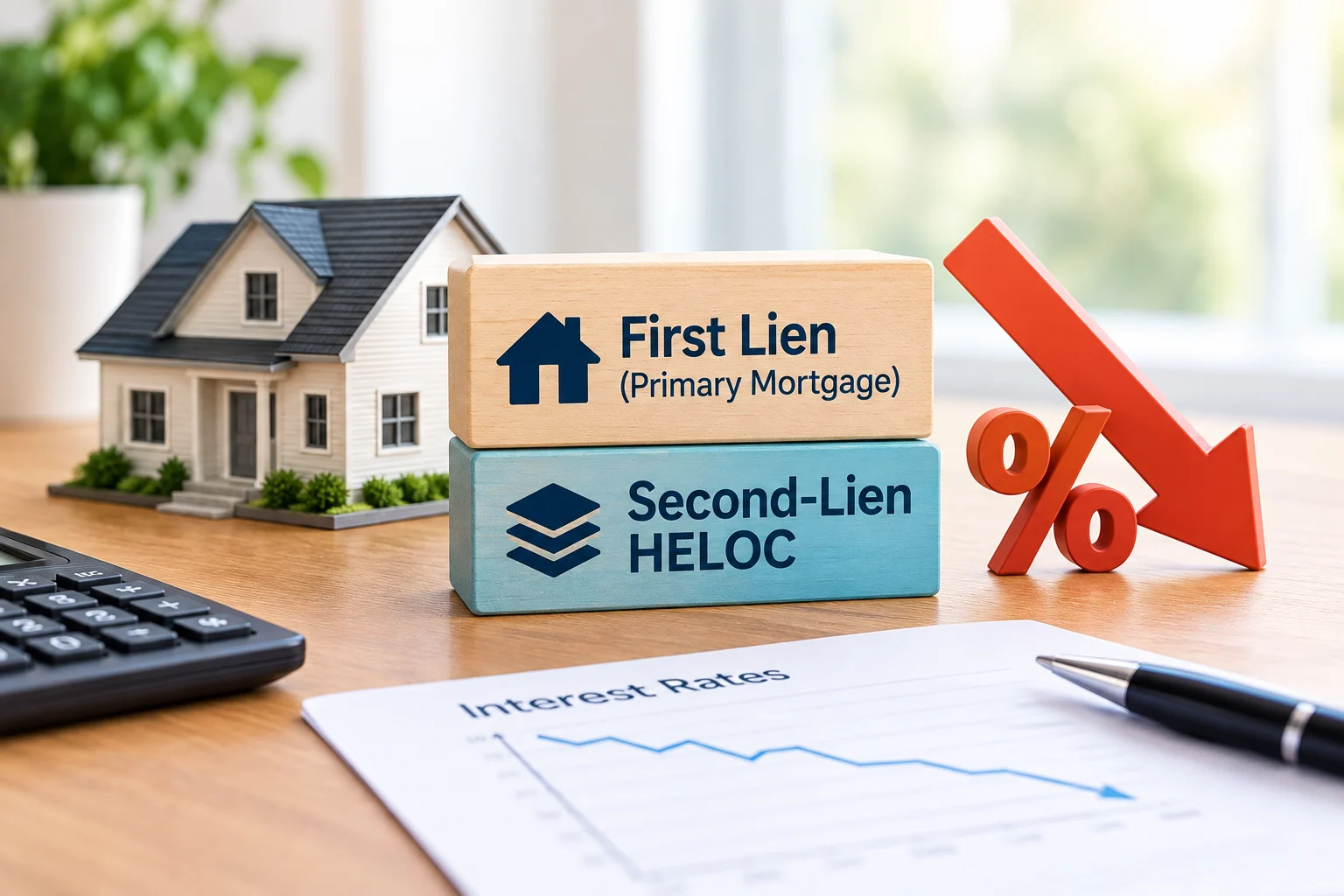
But for homeowners with a second-lien HELOC sitting behind their first mortgage, a falling rate environment introduces a set of complications that rarely get discussed in mainstream refinancing coverage. Having a second lien changes the math, the process, and the risk profile of refinancing in ways that can trap homeowners between two bad options: staying put and missing out on lower rates, or refinancing and running into subordination denials, unexpected costs, or a total-cost outcome that’s worse than they expected.
This guide walks through exactly why falling rates create unique complications for second-lien HELOC holders, the specific traps homeowners fall into, and how to navigate a refinance without getting blindsided.
Understanding the Second-Lien Position in a Rate-Drop Cycle
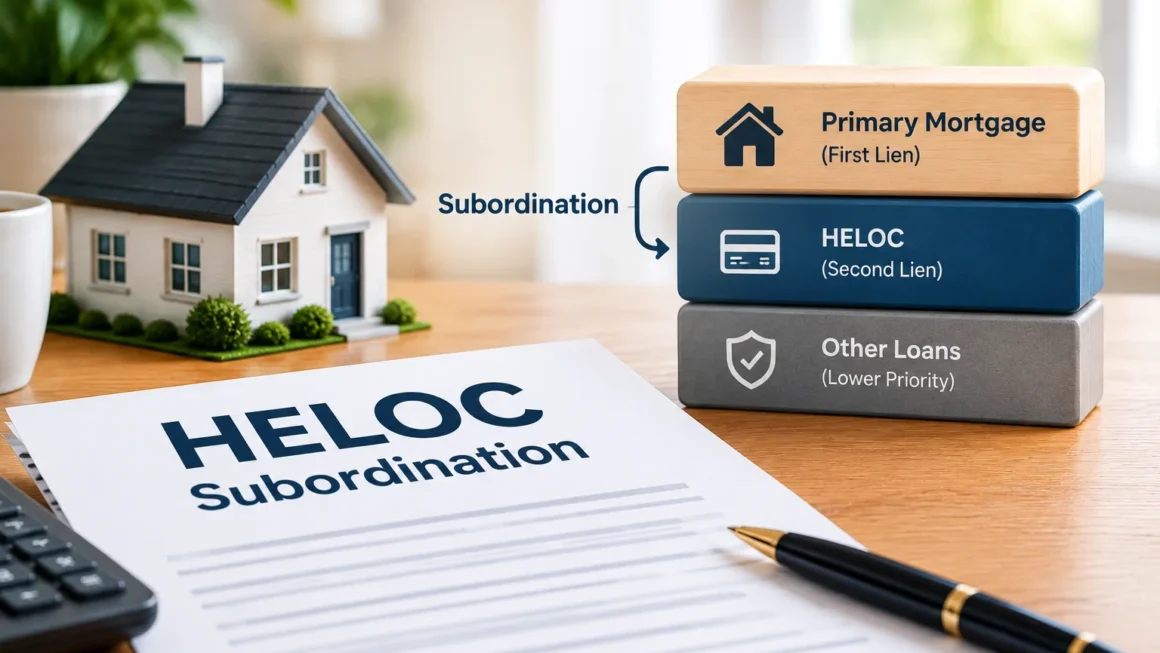
As covered in earlier coverage of HELOC subordination, your HELOC sits in second-lien position behind your primary mortgage. When rates fall and refinancing becomes attractive, this second-lien status becomes the central complicating factor in your decision-making, for a few interconnected reasons.
First, refinancing your first mortgage while a HELOC remains open requires subordination approval from your HELOC lender—a process that isn’t guaranteed and can introduce delay, denial risk, or unexpected conditions, exactly as detailed in prior coverage of the subordination process itself.
Second, and this is where falling rate environments introduce a unique wrinkle: the very market conditions that make refinancing your first mortgage attractive (falling rates, increased refinance volume) often coincide with broader economic shifts that can affect your HELOC’s variable rate, your home’s value, and your HELOC lender’s risk appetite, all at the same time. Understanding how these forces interact is the difference between refinancing successfully and getting caught in one of several traps.
Why Rate-Drop Cycles Specifically Create Second-Lien Complications
Refinance Volume Surges, Slowing Subordination Processing
When rates drop meaningfully, refinance application volume tends to surge across the industry simultaneously, as large numbers of homeowners rush to lock in savings at the same time. This creates a bottleneck effect: your refinance lender’s origination team, your title company, and—critically—your HELOC lender’s subordination department are all handling elevated volume simultaneously.
Subordination requests that might process in a couple of weeks during normal conditions can stretch to four, six, or even eight weeks during high-volume rate-drop periods, simply because HELOC servicers’ subordination departments become backlogged along with everyone else in the industry. This timing risk is magnified precisely when you have the most incentive to refinance quickly, since everyone else with a HELOC and a first mortgage is trying to do the same thing at the same time.
Rate Locks Become a Race Against Subordination Timelines
This is one of the most financially consequential traps in a falling rate environment. You lock a rate on your new first mortgage, typically for a window of 30 to 60 days. If your HELOC subordination approval takes longer than your lock period—a real risk during high-volume periods—you face a choice: pay to extend your rate lock, or risk having it expire and needing to re-lock at whatever the market rate happens to be by that point.
In a falling rate environment, this cuts both ways. If rates continue falling during your subordination wait, a lock extension or re-lock might actually land you a better rate than your original lock. But if rates stabilize or reverse even slightly, you could end up locking at a worse rate than the one you originally secured, entirely because your HELOC’s second-lien subordination process took longer than expected.
HELOC Lenders Reassess Risk During Volatile Periods
Falling rate environments are frequently accompanied by broader economic uncertainty—the reason rates are falling in the first place is often tied to economic softening, recession concerns, or Federal Reserve responses to changing conditions. HELOC lenders, watching the same macroeconomic signals, sometimes tighten subordination approval criteria during these periods specifically because they’re more cautious about second-lien risk when the broader economic outlook is uncertain.
This means the same subordination request that might have sailed through approval during a stable rate environment could face more scrutiny, stricter CLTV requirements, or outright denial during a period of rate-driven refinance activity, precisely because the HELOC lender is reading the same economic tea leaves that are driving rates down in the first place.
Home Values Can Soften Alongside Falling Rates
While falling rates and falling home values don’t move in lockstep, they can coincide during certain economic cycles—particularly when rate drops are driven by broader economic weakness rather than simply routine Federal Reserve policy adjustments. If your home’s value has softened even modestly since your HELOC was originated, your combined loan-to-value ratio may have shifted unfavorably, right at the moment you’re trying to refinance and need subordination approval. This is one of the more counterintuitive traps: the same broader conditions that make refinancing attractive on paper can simultaneously make subordination approval harder to secure.
The Core Refinancing Traps to Watch For
Trap 1: Racing to Refinance Without Confirming Subordination Feasibility First
The most common trap is straightforward: homeowners see rates drop, get excited about potential savings, lock a rate, and only then discover that their HELOC lender’s subordination requirements won’t be met—due to CLTV, credit changes, or lender-specific policy—putting the entire refinance at risk after time and money have already been invested in the process.
The fix is sequencing: before locking a rate or paying for an appraisal, get a preliminary sense of your combined loan-to-value ratio and reach out to your HELOC lender (or your loan officer, who can often make this inquiry on your behalf) about their general subordination policy and current CLTV thresholds. This won’t guarantee approval, but it substantially reduces the odds of an expensive late-stage surprise.
Trap 2: Assuming a Rate-and-Term Refinance Is Automatically “Safe” From Subordination Issues
While cash-out refinances are the most common trigger for subordination denial (since they increase the first mortgage balance and push CLTV higher), rate-and-term refinances aren’t automatically immune. If your home’s value has dropped since your HELOC was originated, even a like-for-like rate-and-term refinance can push combined CLTV into territory your HELOC lender won’t approve, particularly if the falling rate environment is being driven by broader economic softness that’s also affecting home values in your area.
Trap 3: Underestimating How Long Subordination Will Take During High-Volume Periods
As discussed, subordination processing time can stretch significantly during industry-wide refinance surges. Homeowners who assume subordination will move at the same pace it might during a quieter period risk rate lock expiration, forced extensions (often at a cost), or a scramble to re-lock at a potentially less favorable rate if market conditions shift during the delay.
Trap 4: Not Accounting for HELOC Rate Movement During the Refinance Process
Your HELOC’s variable rate is tied to the prime rate, which moves in response to Federal Reserve policy changes—the same policy changes often driving the falling-rate environment that’s motivating your refinance in the first place. If the Fed cuts rates during your refinance process, your HELOC’s rate may drop as well, which is generally good news, but it’s worth understanding this is happening independently of your first mortgage refinance and subordination process, not because of anything related to the subordination itself. Conversely, if the rate environment shifts unexpectedly (rates fall more slowly than anticipated, or reverse), your HELOC rate exposure continues regardless of how your first mortgage refinance plays out.
Trap 5: Refinancing Into a Larger First Mortgage to “Simplify,” Without Realizing the Full Cost
Some homeowners, frustrated by the subordination process or worried about denial risk, decide to simply roll their HELOC balance into a new, larger first mortgage through a cash-out refinance—eliminating the second lien and the subordination question. While this can be a reasonable strategy in some cases, it’s worth carefully comparing the true cost: HELOC debt, often used for renovations or short-term needs, gets converted into 15- or 30-year fully amortizing mortgage debt, meaning you could end up paying significantly more in total interest over time, even at a lower rate, simply because the repayment timeline has been extended so much further.
Trap 6: Ignoring the HELOC Draw Period Status When Timing a Refinance
If your HELOC is approaching the end of its draw period and about to enter the repayment period (when the balance begins amortizing and payments typically increase significantly), the timing of your first mortgage refinance relative to this transition matters. Refinancing shortly before your HELOC repayment period begins can compound financial pressure—you’re absorbing new first mortgage closing costs and potentially higher escrow funding requirements at the same time your HELOC payment is about to jump. Understanding where you sit in your HELOC’s draw/repayment timeline is an important input into your refinance timing decision, not just the prevailing first-mortgage rate environment.
Trap 7: Assuming All HELOC Lenders Move at the Same Pace or Follow the Same Policies
Subordination processing time and approval criteria vary significantly by lender. A homeowner who has heard that “subordination usually takes a couple of weeks” may be working from someone else’s experience with a different, faster-moving institution. It’s worth asking your specific HELOC lender directly about their typical subordination turnaround and current policy, rather than relying on general assumptions, especially during high-volume rate-drop periods when timelines can vary even more widely between institutions.
Trap 8: Not Recalculating Combined Monthly Payments Holistically
Homeowners sometimes evaluate refinance savings purely by comparing old first-mortgage payment to new first-mortgage payment, without factoring in their HELOC payment, escrow changes on the new first mortgage, and how these pieces interact as a total housing cost picture. A refinance that looks like clear savings when viewed in isolation can look different once the full picture—including HELOC payment trajectory, especially if it’s approaching the repayment period—is factored in.
Why “Just Wait for Rates to Fall Further” Isn’t Automatically the Safer Strategy
Some homeowners, upon learning about subordination risk and refinancing complications, conclude that the safest move is simply to wait—for rates to fall further, for their HELOC balance to decrease, or for their home value to appreciate before attempting to refinance. This can be a reasonable strategy in some cases, but it isn’t automatically the safer choice, for a few reasons.
Waiting doesn’t guarantee more favorable subordination conditions. If broader economic softness is part of what’s driving rates down, home values and HELOC lender risk appetite could continue to soften during the waiting period too, rather than improving.
Rate environments can reverse. Falling rate cycles don’t move in a straight line, and there’s no guarantee that waiting results in an even better rate than what’s currently available, particularly if broader economic or policy conditions shift.
HELOC repayment period timing doesn’t wait for optimal refinance conditions. If your HELOC is approaching its repayment period regardless of what first-mortgage rates do, delaying your first mortgage refinance doesn’t delay that separate timeline.
The more productive framing isn’t “refinance now” versus “wait indefinitely,” but rather building a clear picture of your specific combined loan-to-value trajectory, your HELOC lender’s current subordination posture, and your HELOC’s draw/repayment timeline, then making a decision based on your specific numbers rather than general market sentiment about falling rates.
How to Protect Yourself: A Practical Framework
Step 1: Calculate Your Current Combined Loan-to-Value Ratio
Before doing anything else, get a realistic sense of your home’s current value (not the value from when you took out the HELOC) and calculate your combined loan-to-value ratio: your first mortgage balance plus your HELOC’s full credit limit (not just current balance, since lenders typically evaluate the full limit), divided by your home’s current value. This single number is the most important input into how your subordination request is likely to be received.
Step 2: Contact Your HELOC Lender Before Locking a Rate
Reach out to your HELOC servicer directly (or have your refinance loan officer do so) to get a general sense of their current subordination policy, typical CLTV thresholds, and current processing timelines. This conversation, ideally, happens before you commit to a rate lock, not after.
Step 3: Build in Buffer Time for Your Rate Lock
If you know subordination processing is likely to take several weeks, particularly during a high-volume rate-drop period, consider locking your rate for a longer window than the minimum offered, even if it costs slightly more upfront, to reduce the risk of a costly lock expiration mid-process.
Step 4: Know Where You Stand in Your HELOC’s Draw Period
Check your HELOC agreement or contact your servicer to understand exactly when your draw period ends and repayment begins. If that transition is approaching, factor this into your overall refinance timing and total monthly payment planning, not just the first-mortgage rate comparison.
Step 5: Have a Contingency Plan for Subordination Denial
Before starting the process, think through what you’d do if subordination were denied: Could you pay down the HELOC balance? Would you consider closing it and rolling the balance into a cash-out refinance instead? Having this answer in advance prevents a scramble if denial happens late in the process.
Step 6: Evaluate the Full Cost Picture, Not Just the Headline Rate
Compare your total monthly housing cost (new first mortgage payment, HELOC payment at its current or upcoming rate, and any escrow changes) before and after the refinance, rather than focusing solely on the first-mortgage principal-and-interest comparison.
A Realistic Scenario Walkthrough
Consider a homeowner who opened a HELOC two years ago when their home was worth $450,000, with a $50,000 credit limit against a $320,000 first mortgage—a combined CLTV of about 82%. Rates begin falling meaningfully, driven partly by economic softening, and this homeowner sees an opportunity to refinance their first mortgage into a notably lower rate.
They lock a rate quickly, excited about the savings, without first checking in with their HELOC lender. Three weeks into the refinance process, their loan officer submits the subordination request. In the meantime, a home value assessment tied to the subordination review comes back lower than expected—reflecting some of the same economic softness driving rates down—putting their combined CLTV closer to 88%. Their HELOC lender’s subordination policy caps CLTV at 85%, and the request is denied.
Now this homeowner faces a choice under time pressure, with their rate lock ticking down: pay down the HELOC balance to bring CLTV back into range (if they have the cash available), request a HELOC credit limit reduction, extend their rate lock at a cost while they sort out a solution, or abandon the refinance altogether.
Had this homeowner checked in with their HELOC lender before locking a rate—getting a sense of current CLTV thresholds and their own updated home value estimate—they might have identified this risk in advance, potentially paying down a portion of the HELOC balance proactively or adjusting their refinance strategy before committing to a rate lock and incurring the associated costs and time pressure.
Special Considerations During Federal Reserve Rate-Cutting Cycles
Falling mortgage rates are frequently connected to Federal Reserve policy, though the relationship isn’t perfectly direct (mortgage rates are influenced by long-term bond markets more than the Fed’s short-term rate directly, while HELOC rates are much more directly tied to the prime rate, which does move closely with Fed policy). This distinction matters for second-lien HELOC holders specifically.
During a Fed rate-cutting cycle, your HELOC’s variable rate is likely to decrease relatively quickly and directly, since it’s tied to the prime rate. Your first mortgage refinance rate, on the other hand, depends more on broader bond market conditions and may not move in perfect sync with Fed rate cuts. This means it’s possible to be in a situation where your HELOC rate has already dropped meaningfully due to Fed action, reducing the urgency of addressing that piece of your debt, while first-mortgage refinance rates are still working through their own separate adjustment process. Understanding this distinction can help you time your overall refinance strategy more accurately, rather than assuming both rates are moving in lockstep on the same timeline.
When It Might Make Sense to Refinance the HELOC Itself, Rather Than Just Subordinate
In some falling-rate scenarios, rather than simply subordinating your existing HELOC behind a new first mortgage, it may be worth exploring whether refinancing the HELOC itself—paying it off with a new HELOC or home equity loan under fresh terms—makes sense as part of the same overall refinancing strategy.
This could make sense if your existing HELOC’s margin over prime is notably worse than current market offers (perhaps because your credit has improved since origination, or because competitive dynamics between lenders have shifted), or if you’d prefer to reset your draw period rather than being partway through an existing timeline that’s approaching repayment. This adds complexity and additional underwriting to your overall refinancing project, but during a period where you’re already dealing with first-mortgage refinance logistics, it may be an efficient time to also reassess whether your HELOC itself is still competitively priced.
Frequently Asked Questions
Does a falling rate environment make subordination approval easier or harder?
It can go either way, and this is precisely what makes falling rate environments tricky for second-lien holders. Falling rates increase refinance volume (slowing subordination processing) and sometimes coincide with softer home values or more cautious HELOC lender risk postures, which can make approval harder even though the underlying first-mortgage rate opportunity is attractive.
Should I close my HELOC before attempting to refinance my first mortgage in a falling rate environment?
Not necessarily. Closing your HELOC eliminates the subordination issue but also eliminates your access to that credit line. Whether this tradeoff makes sense depends on whether you still want or need revolving access to your home equity, and whether you have the funds available to pay it off in the first place.
How much does a high-volume refinance period actually slow down subordination?
This varies significantly by lender, but it’s not uncommon for processing times to roughly double or more during major rate-drop-driven refinance surges compared to quieter periods, making early inquiry and longer rate lock buffers particularly important during these windows.
If my HELOC rate is falling anyway due to the Fed, do I still need to worry about refinancing my first mortgage?
Your HELOC rate and your first mortgage rate are separate considerations. A falling HELOC rate (due to prime rate movement) doesn’t address whether your first mortgage rate is still higher than current market offers—these are two distinct opportunities that happen to sometimes align during the same broader rate-cutting cycle.
What’s the single biggest mistake homeowners make with second-lien HELOCs during falling rate periods?
Locking a first-mortgage refinance rate before confirming subordination feasibility with their HELOC lender, especially during high-volume periods when both processing delays and CLTV/valuation risk are elevated simultaneously.
Final Thoughts
Falling interest rates create genuine opportunity for homeowners looking to lower their mortgage costs, but for anyone holding a second-lien HELOC, that opportunity comes bundled with a distinct set of risks that don’t get much attention in general refinancing coverage. Rate-drop cycles increase refinance volume, which slows subordination processing at exactly the moment homeowners are most eager to move quickly. They sometimes coincide with softening home values or more cautious HELOC lender risk postures, tightening the very approval odds homeowners are counting on. And they can create timing pressure between rate locks and subordination approval that turns what should be straightforward savings into a stressful scramble.
None of this means second-lien HELOC holders should avoid refinancing during falling rate periods—the potential savings are often real and worth pursuing. But the smart approach is sequencing the process correctly: understanding your combined loan-to-value position, checking in with your HELOC lender before locking a rate, building in buffer time for subordination processing, and having a contingency plan if approval doesn’t come through as expected. Homeowners who treat subordination as a parallel, equally important process—rather than an afterthought behind the more exciting first-mortgage rate conversation—are the ones who come out of a falling rate environment with the savings they were actually chasing, rather than a stalled refinance and a missed opportunity.