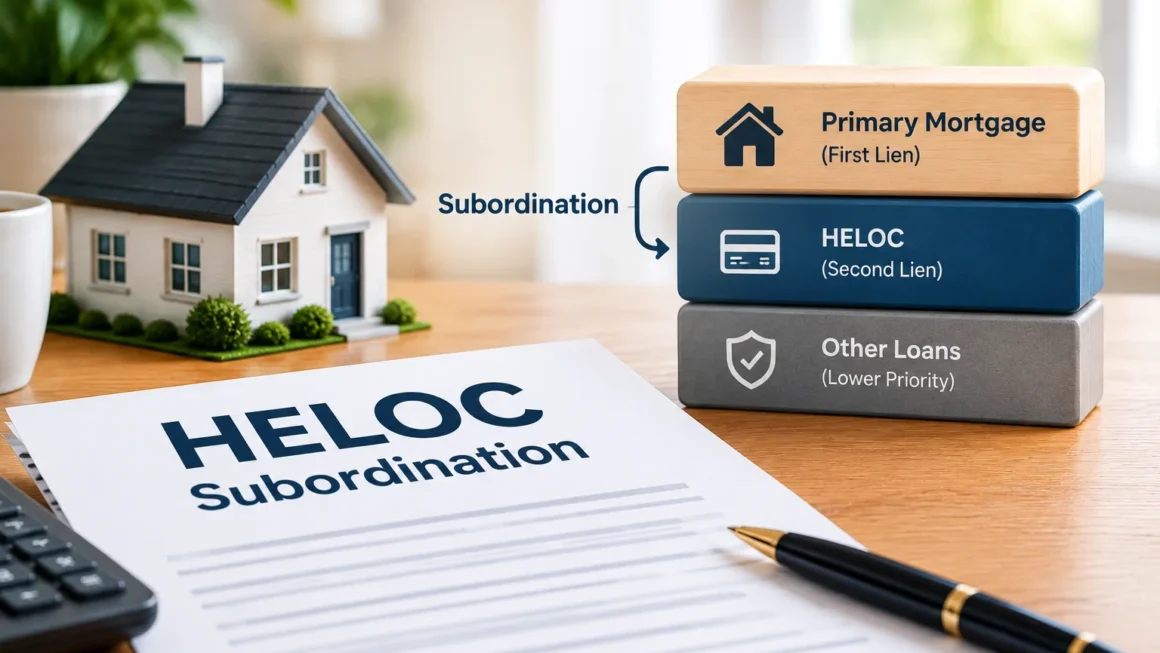

Introduction: The Tempting Math of Trading Credit Card Debt for Mortgage Debt
Credit card APRs have averaged north of 22% through much of 2026, while 30-year mortgage refinance rates — even with recent volatility — are running in the high-6% to low-7% range. On paper, that’s an enormous spread. If you’re staring down $25,000 in credit card balances at 22%+ APR, the idea of rolling that debt into your mortgage at a fraction of the rate feels like an obvious win.
It can be. But a cash-out refinance is not simply “swap a high rate for a low rate.” It’s a fundamentally different kind of debt: unsecured credit card debt becomes secured mortgage debt, a short-term problem becomes a 30-year one (unless you actively manage the term), and the closing costs, mortgage insurance implications, and rate reset on your entire loan balance all factor into whether this move actually saves you money.
Debt consolidation loans — typically unsecured personal loans specifically marketed for this purpose — solve the same underlying problem (multiple high-interest balances, one lower-rate payment) without touching your house at all. They come with their own tradeoffs: higher rates than a mortgage, shorter terms, and origination fees that can eat into the savings.
This guide walks through the complete, honest cost comparison between a cash-out refinance and a debt consolidation loan for paying off credit cards and personal loans — with real numbers, break-even math, and the scenarios where each option wins.
How a Cash-Out Refinance Works
A cash-out refinance replaces your existing mortgage with a new, larger mortgage. The new loan pays off your old mortgage balance, and you receive the difference — the “cash out” — as a lump sum at closing. That cash can be used for anything, including paying off credit cards, personal loans, medical debt, or other high-interest obligations.
Key Mechanics
- You need equity. Lenders generally cap cash-out refinances at 80% loan-to-value (LTV) for conventional loans, meaning you need to retain at least 20% equity in the home after the cash-out. FHA cash-out refinances allow up to 80% LTV as well; VA cash-out refinances can go up to 90% or even 100% LTV in some cases.
- The entire loan resets. You’re not just refinancing the cash-out portion — your entire existing mortgage balance gets rolled into the new loan at the new rate and (typically) a new 30-year term, unless you specifically choose a shorter term.
- A full appraisal is required. Unlike an FHA Streamline or VA IRRRL, a cash-out refinance requires a new appraisal to establish current home value and confirm your LTV.
- Full underwriting applies. Income, employment, assets, credit, and debt-to-income ratio are all verified, similar to a purchase loan.
- Closing costs apply to the full new loan amount, not just the cash-out portion — typically 2%–5% of the total loan.
Example of the Mechanics
Say you owe $220,000 on your current mortgage and your home is now worth $400,000. At 80% LTV, your maximum new loan amount would be $320,000. After paying off the $220,000 existing balance, that leaves roughly $100,000 available for cash-out, closing costs, and any other purposes — though most homeowners doing a debt-payoff cash-out refinance take out only what they need to clear their high-interest balances, not the full amount available.
How a Debt Consolidation Loan Works
A debt consolidation loan is typically an unsecured personal loan used to pay off multiple existing debts — credit cards, other personal loans, medical bills — and replace them with a single fixed monthly payment.
Key Mechanics
- No collateral required (in the vast majority of cases) — your home, car, and other assets aren’t at risk if you default.
- Fixed rate, fixed term. Most debt consolidation loans carry terms of 2–7 years, with a fixed interest rate and fixed monthly payment for the life of the loan.
- Approval is based primarily on credit and income, not home equity — this makes it accessible to renters and homeowners without significant equity.
- Funding is fast. Many online lenders can fund a consolidation loan within 1–5 business days of approval, compared to the multi-week timeline of a cash-out refinance.
- Origination fees are common, typically ranging from 1% to 9.99% of the loan amount depending on the lender and your credit profile, usually deducted from the loan proceeds before disbursement.
Current Rate Environment: Why the Comparison Matters Right Now (September 2026)
Understanding today’s rate landscape is essential to this comparison, since the size of the rate spread directly determines which option saves more money.
| Debt Type | Typical Current Rate (Sept 2026) |
| Credit cards (accounts carrying a balance) | ~22.15% average APR |
| Personal loans/debt consolidation loans, excellent credit (720+) | ~11%–15% APR (best available rates start around 6.2%) |
| Personal loans/debt consolidation loans, average credit | ~14%–20% APR |
| Personal loans, credit unions | ~10.7% average |
| 30-year cash-out refinance (conventional) | ~6.7%–7.3% |
| 15-year cash-out refinance (conventional) | ~6.0%–6.5% |
The spread between credit cards and mortgage rates is dramatic — often 15 percentage points or more. The spread between credit cards and a personal loan is smaller but still substantial for most borrowers, often 5–12 percentage points. This is the core tension of the decision: a cash-out refinance offers the lowest rate on the market, but it applies that rate to your entire mortgage balance for up to 30 years, not just the debt you’re paying off. A debt consolidation loan has a higher rate than a mortgage, but it’s limited to a much shorter term and doesn’t touch your home.
The All-In Cost of a Cash-Out Refinance: What People Miss
The advertised interest rate on a cash-out refinance is only part of the real cost. Here’s everything that factors into the true all-in cost.
1. Closing Costs on the ENTIRE New Loan Amount
This is the detail most borrowers underestimate. Closing costs — origination fees, appraisal, title insurance, recording fees, underwriting fees — are typically calculated as a percentage of the total new loan balance, not just the cash-out amount. If you’re refinancing a $220,000 existing balance plus $30,000 cash-out into a $250,000+ loan, your 2%–5% closing costs apply to the full $250,000+, not just the $30,000 you’re actually using to pay off debt.
Example: At 3% average closing costs on a $250,000 cash-out refinance, that’s $7,500 in closing costs — to access $30,000 in cash. Effectively, you’re paying a 25% “fee” on the cash-out portion alone, before even factoring in the interest rate.
2. The Interest Rate Applies to Your ENTIRE Mortgage, Not Just the Cash-Out Portion
If your current mortgage rate is 5.5% and current cash-out refinance rates are running 6.8%, refinancing to access $30,000 in cash means your entire existing balance — say $220,000 — also moves from 5.5% to 6.8%. That’s a rate increase on $220,000 of debt you weren’t trying to touch, purely as a side effect of accessing $30,000.
This is the single biggest hidden cost of a cash-out refinance for debt payoff, and it’s easy to overlook if you only compare the new mortgage rate to your credit card rate without accounting for what happens to your existing, lower-rate mortgage balance.
3. Extending Your Mortgage Term Resets Your Amortization
If you’re 8 years into a 30-year mortgage and refinance into a new 30-year loan, you’re extending your total payoff timeline by 8 years. Even though your rate might be similar to or lower than your original rate, you’re back at the beginning of the amortization schedule — meaning a larger share of your payment goes to interest again in the early years, and you’ll pay interest on your mortgage for a longer overall period.
4. Mortgage Insurance Implications
If your cash-out pushes your loan-to-value ratio above 80%, you may trigger private mortgage insurance (PMI) on a conventional loan, or increase your mortgage insurance premium on an FHA loan — an ongoing monthly cost that didn’t exist before, layered on top of the higher balance and rate.
5. You’re Converting Unsecured Debt Into Secured Debt
This is a risk factor rather than a line-item cost, but it deserves real weight. Credit card debt is unsecured — if you default, the consequence is damaged credit and potential collections, but you don’t lose your home. Once you roll that debt into your mortgage, it becomes secured by your house. If you fall behind on the new, larger mortgage payment down the road, you’re now risking foreclosure over debt that used to be unsecured.
The All-In Cost of a Debt Consolidation Loan: What People Miss
Debt consolidation loans have their own less-obvious costs worth factoring in.
1. Origination Fees Reduce Your Actual Proceeds
Many personal loan lenders charge an origination fee of 1%–9.99%, deducted from the loan amount before you receive funds. If you’re approved for a $25,000 loan with a 5% origination fee, you actually receive $23,750 — but you owe interest on the full $25,000. This effectively raises your true APR above the advertised interest rate, which is why comparing APR (not just interest rate) across lenders matters.
2. Rates Vary Enormously by Credit Score
The published “average” rate hides a huge range. Borrowers with scores of 720+ might land in the 11%–15% range or even lower at credit unions, while borrowers with fair credit (640–679) can see rates climb into the high 20s or even 30%+ — in which case a debt consolidation loan may not actually beat the credit card rates it’s replacing.
3. Shorter Terms Mean Higher Monthly Payments
Because consolidation loans typically run 2–7 years rather than a mortgage’s 15–30, the monthly payment on a given balance will be meaningfully higher than the equivalent portion of a mortgage payment — even at a similar or even lower interest rate. This is a real cash-flow consideration, not just a total-cost one.
4. Some Lenders Charge Prepayment Penalties
Not all, but some — read the loan terms carefully if you might want to pay the loan off early once your finances improve.
Real-World Comparison: $30,000 in High-Interest Debt
Let’s run the full comparison using a realistic scenario reflecting current 2026 rates.
Scenario: A homeowner has $30,000 combined across credit cards (averaging 22.15% APR) and a personal loan (averaging 14% APR). They have an existing mortgage balance of $220,000 at a 5.5% rate with 22 years remaining on the original 30-year term. Their home is currently worth $400,000.
Option A: Cash-Out Refinance
| Details | |
| New loan amount | $250,000 ($220,000 payoff + $30,000 cash-out) |
| New rate (30-year fixed, current market) | 6.85% |
| New monthly payment (P&I) | $1,637 |
| Old monthly payment on $220,000 at 5.5% | $1,349 |
| Increase in monthly mortgage payment | $288/month |
| Closing costs (3% of $250,000) | $7,500 |
| Total upfront cost | $7,500 |
Total interest paid over the life of the new loan (30 years at 6.85% on $250,000): approximately $340,000 in interest alone, compared to roughly $170,000 in remaining interest the borrower would have paid on the original $220,000 balance at 5.5% over its remaining 22 years. The delta — roughly $170,000 in additional lifetime interest — is the real cost of resetting the clock and rate on the entire loan, not just the $30,000 that was actually needed.
Option B: Debt Consolidation Loan
| Details | |
| Loan amount | $30,000 |
| Interest rate (good credit, ~720 FICO) | 13% APR |
| Origination fee (4%) | $1,200 (deducted from proceeds) |
| Term | 5 years |
| Monthly payment | $683 |
| Total interest paid over 5 years | $10,980 |
| Total cost (interest + origination fee) | $12,180 |
| Existing mortgage | Untouched — stays at $220,000 / 5.5% / 22 years remaining |
Side-by-Side Summary
| Cash-Out Refinance | Debt Consolidation Loan | |
| Upfront cost | $7,500 | $1,200 |
| New monthly obligation | +$288/month (added to mortgage, indefinitely over 30 yrs) | $683/month (fixed, 5 years, then gone) |
| Total interest cost tied to this decision | ~$170,000+ additional lifetime interest (due to resetting term/rate on entire balance) | ~$10,980 over 5 years |
| Time to be debt-free on the $30,000 | 30 years (unless paid down faster or home sold) | 5 years |
| Risk profile | Debt becomes secured by home | Debt remains unsecured |
| Effect on existing low mortgage rate | Lost — entire balance moves to new higher rate | Preserved |
This example is illustrative — the borrower’s existing rate of 5.5% is meaningfully below current market rates, which makes the cash-out option look particularly costly by comparison. The math shifts substantially if your current mortgage rate is already close to or above today’s market rates — in that case, a cash-out refinance doesn’t cost you the “lost low rate” penalty, and the comparison looks very different (see the next section).
When a Cash-Out Refinance Makes More Sense
The scenario above is deliberately conservative toward the cash-out option because the borrower had a well-below-market existing rate. Here’s when the math tilts the other way.
Your Current Mortgage Rate Is at or Above Today’s Market Rate
If you bought or last refinanced during a higher-rate window — for instance, at 7.5% in 2023 — and current cash-out refinance rates are running 6.8%–7.0%, you could potentially lower your rate on your existing balance while also accessing cash. In this case, there’s no “lost low rate” penalty, and the comparison becomes purely about closing costs vs. the personal loan’s rate and origination fee.
You Have a Large Debt Balance Relative to Your Mortgage
The math favors a cash-out refinance more as the debt being consolidated grows relative to the total loan. Closing costs are a relatively fixed percentage of the total loan amount, so a $60,000 cash-out on a $300,000 total loan spreads those costs over a larger benefit than a $10,000 cash-out on the same loan.
You Want the Lowest Possible Monthly Payment
Because mortgage terms stretch to 30 years, the monthly payment impact of adding debt to a mortgage is far smaller than adding the same debt to a 3–5 year personal loan — even though the total interest paid over time is typically much higher. For borrowers in genuine cash-flow distress who need the lowest possible required payment to stay current on all obligations, this can be the deciding factor, even knowing it costs more in total interest.
You Plan to Pay Extra Toward the Mortgage Anyway
If you refinance into a lower rate than your current mortgage AND commit to paying the new loan down aggressively (rather than stretching payments over the full 30 years), you can capture both the lower rate and avoid much of the “30-year debt” downside — though this requires real payment discipline most households don’t maintain in practice.
When a Debt Consolidation Loan Makes More Sense
You Don’t Have Enough Home Equity
If your LTV is already near or above 80%, you may not have enough equity to do a meaningful cash-out refinance at all, or you’d trigger PMI that erodes the savings. A debt consolidation loan doesn’t require any equity.
Your Existing Mortgage Rate Is Well Below Current Market Rates
As shown in the example above, this is the scenario where a cash-out refinance is most expensive — you’d be giving up a low rate on your entire balance to access a relatively small amount of cash.
You Want the Debt Gone on a Predictable Timeline
A 5-year consolidation loan has a hard end date. A cash-out refinance, absent extra payments, extends the debt over the remaining life of your mortgage — often 25–30 years. For borrowers who value a defined payoff date and the psychological benefit of “this will be done by X year,” a consolidation loan delivers that directly.
You Want to Avoid Closing Costs and a Full Underwriting Process
Cash-out refinances involve appraisals, full income/asset documentation, and typically 30–45 day closings. Debt consolidation loans can often be approved and funded within a week, with far less paperwork.
You Don’t Want to Risk Your Home
This is the most important non-financial consideration. Converting unsecured debt into mortgage debt means a future financial setback that causes you to miss payments now puts your house at risk, not just your credit score.
Cash-Out Refinance vs. Debt Consolidation Loan: Full Comparison Table
| Factor | Cash-Out Refinance | Debt Consolidation Loan |
| Collateral | Your home | None (unsecured) |
| Typical rate (Sept 2026) | 6.7%–7.3% (30-yr) | 11%–20%+ depending on credit |
| Applies to | Entire mortgage balance | Only the amount borrowed |
| Typical term | 15–30 years | 2–7 years |
| Closing costs/fees | 2%–5% of total new loan amount | 1%–9.99% origination fee on loan amount only |
| Appraisal required | Yes | No |
| Documentation | Full income/asset/credit underwriting | Credit and income check, lighter documentation |
| Funding timeline | 30–45 days | 1–5 business days (typical) |
| Risk if you default | Foreclosure risk | Credit damage, collections — not home loss |
| Effect on existing mortgage rate | Entire balance moves to new rate | No effect — existing mortgage untouched |
| Best for | Large debt relative to loan size, current mortgage rate at/above market, need lowest monthly payment | Smaller debt balances, low existing mortgage rate, want defined payoff timeline, limited home equity |
A Third Option Worth Mentioning: HELOC for Debt Payoff
While this article focuses on the cash-out refinance vs. consolidation loan comparison, it’s worth briefly noting a middle-ground option: a home equity line of credit (HELOC). A HELOC lets you borrow against your home’s equity without touching your existing first mortgage, meaning your low-rate first mortgage stays untouched while you access funds through a separate line, typically at a variable rate. This avoids the “reset the whole loan” problem of a cash-out refinance while still using home equity (with the associated risk of securing the debt against your home). HELOC rates and structures deserve their own dedicated comparison, since the variable-rate exposure and draw/repayment period mechanics add complexity beyond the scope of this all-in cost comparison.
Step-by-Step: How to Decide Which Option Is Right for You
- List every debt you’re considering consolidating, with exact balances, rates, and minimum payments.
- Check your current mortgage rate and remaining term. If it’s meaningfully below current market refinance rates, that’s a strong signal toward a debt consolidation loan instead.
- Get a real cash-out refinance quote, including the exact new rate and full closing cost breakdown on the total loan amount — not just an estimate.
- Get real debt consolidation loan quotes from at least 3 lenders, including the exact APR (not just the interest rate) and origination fee, to see your true cost.
- Calculate total interest cost under each option over a realistic payoff timeline — for the cash-out refinance, calculate both the “full 30-year” scenario and a “pay extra to match your consolidation loan’s timeline” scenario, since the difference matters enormously.
- Factor in your risk tolerance. If the idea of your house being on the line for what is currently unsecured debt is uncomfortable, that’s a legitimate reason to lean toward a consolidation loan even if the raw numbers favor the refinance.
- Consider your spending discipline going forward. Debt consolidation of any kind only works if you stop accumulating new high-interest debt on the accounts you just paid off. Both options fail financially if the credit cards get run back up afterward.
Common Mistakes to Avoid
1. Comparing only the interest rate, not the all-in cost. A 6.8% mortgage rate sounds dramatically better than a 13% personal loan rate, but once you account for closing costs on the entire loan balance and the lost value of a below-market existing rate, the true cost comparison can flip entirely.
2. Ignoring what happens to your existing mortgage rate. This is the single most overlooked factor in cash-out refinance math. If you have a 4% or 5% mortgage, moving your entire balance to today’s rates is a real cost that must be weighed against the benefit of consolidating a relatively small debt amount.
3. Stretching debt over 30 years without a plan to pay it down faster. Rolling $30,000 in credit card debt into a mortgage and only making the minimum new payment can mean paying far more in total interest than if you’d kept the debt on the original terms, purely because of how long you’re paying interest on it.
4. Not shopping multiple debt consolidation lenders. Personal loan rates for the same borrower can vary by 5–10+ percentage points between lenders, especially between credit unions, online lenders, and traditional banks. Always compare at least three offers.
5. Running up the credit cards again after consolidating. Whichever option you choose, if the underlying spending behavior doesn’t change, you can end up with both the original problem (new credit card debt) and the new debt (higher mortgage balance or consolidation loan payment) — a worse position than where you started.
6. Not accounting for the origination fee when comparing personal loan offers. A loan with a lower advertised rate but a high origination fee can end up costing more than a loan with a slightly higher rate and no fee. Always compare full APR, not just the headline interest rate.
Frequently Asked Questions
Is a cash-out refinance always cheaper than a debt consolidation loan because mortgage rates are lower? No. While the mortgage rate itself is typically much lower than a personal loan rate, the cash-out refinance applies that rate (and its closing costs) to your entire mortgage balance, not just the debt being paid off, and extends repayment over a much longer term. Depending on your existing mortgage rate, loan size, and how quickly you’d pay down each option, a debt consolidation loan can end up being the cheaper choice in total cost, even at a higher interest rate.
How much equity do I need for a cash-out refinance? Most lenders require you to retain at least 20% equity after the cash-out for a conventional loan, meaning your total new loan (existing balance plus cash-out) can’t exceed 80% of your home’s current appraised value. FHA cash-out refinances follow a similar 80% LTV cap. VA cash-out refinances can go up to 90%–100% LTV for eligible veterans.
Will a cash-out refinance or debt consolidation loan hurt my credit score? Both involve a hard credit inquiry, which causes a small, typically temporary dip. Beyond that, both can help your credit over time by lowering your credit utilization ratio (since you’re paying off revolving credit card balances) — though a cash-out refinance adds a new large installment loan, and a consolidation loan does the same on a smaller scale. Missing payments on either is far more damaging than the initial inquiry.
Can I do a cash-out refinance if I have less-than-perfect credit? Yes, though your rate and available loan-to-value will typically be less favorable than for borrowers with strong credit. FHA cash-out refinances tend to have more flexible credit requirements than conventional cash-out refinances, though they carry mortgage insurance costs.
What’s the minimum credit score for a debt consolidation loan? It varies significantly by lender. Some online lenders will work with borrowers in the low-to-mid 600s (or even lower with certain fintech lenders), though rates for these borrowers are typically much higher and can approach or exceed the credit card rates being consolidated — at which point the loan may not provide meaningful savings.
Does paying off credit cards with a cash-out refinance or consolidation loan close the accounts? No, paying off a credit card balance doesn’t close the account unless you specifically request it. Many financial advisors suggest keeping the accounts open (without carrying new balances) to preserve your overall available credit and credit history length, both of which affect your credit score.
What happens if home values drop after I do a cash-out refinance? If your home’s value declines significantly after a cash-out refinance, you could end up with little to no equity, or in a worst-case scenario, owe more than the home is worth. This is a real risk to weigh, particularly if you’re taking your LTV close to the maximum allowed.